nparadise
Natural Paradise

Natural Paradise
8-day Cruise "A"
Day 1: Tuesday
In the morning:
San Cristobal airport arrival
San Cristobal airport arrival
You will arrive at San Cristobal Island in the morning.<br /><br />
After passing through immigration and baggage claim, you will be met by a @boat@ staff member and transferred to the yacht. You will be shown to your cabin where you will have some time to settle in before lunch and a welcome briefing.
San Cristobal airport arrival, San Cristobal Island |
|
|---|---|
Difficulty: |
Easy |
Type of Landing: |
Dry Landing |
 |
|
|---|---|
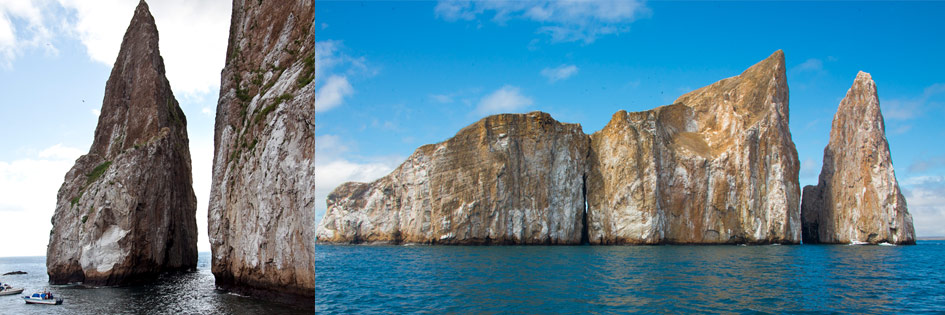
Kicker Rock, San Cristobal Island |
|
Highlights & Animals: |
Sharks, tropical fish, turtles, manta rays (occ.), hammerhead sharks, spectacular rock formations; sea birds: blue- footed boobies, Nazca boobies & frigate birds. |
Difficulty: |
Easy |
Type of Landing: |
No Landing |
Possible Activities: | cn |
Afterwards:
Witch Hill
Witch Hill
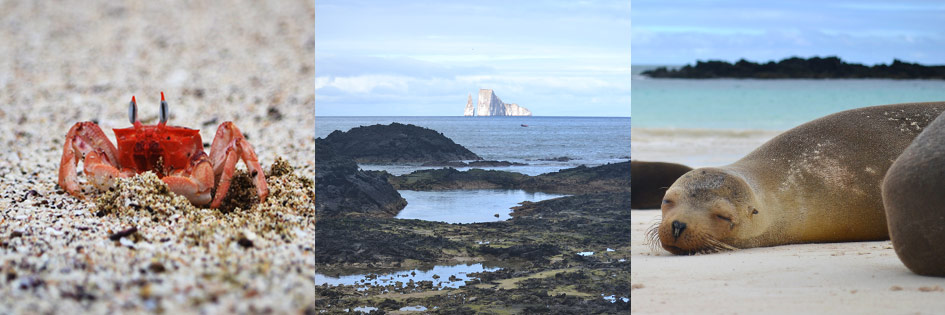
Located on the northern coast, this eroded hill and its surroundings present one of the most picturesque beaches in the Galapagos with its white powdery sand and the abundance of animals. Wildlife includes sea turtles, rays, and various types of booby birds. The clear water provides an excellent opportunity for enjoying swimming and snorkeling.
 |
|
|---|---|
Witch Hill, San Cristobal Island |
|
Highlights & Animals: |
Beautiful rock formations, sea lions, shore birds, finches and mockingbirds; Snorkeling: nice tropical fish, anemones, sponges, coral |
Difficulty: |
Easy |
Type of Landing: |
Wet Landing |
Possible Activities: | ca, sn, pr, ky, pb |
Day 2: Wednesday
In the morning:
South Plaza Island
South Plaza Island
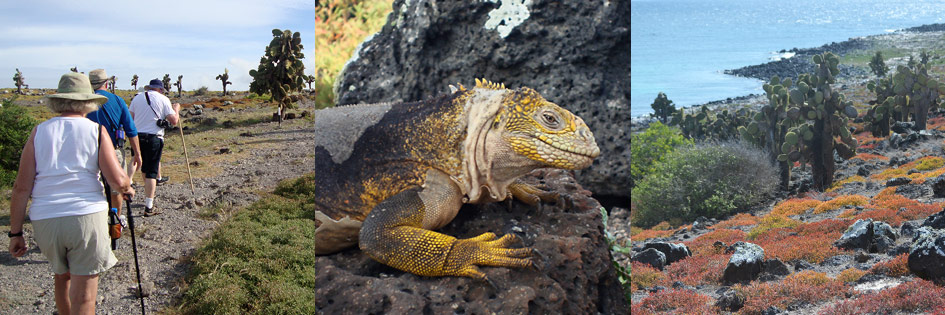
This small island with steep cliffs was formed by rising lava and is now covered by Opuntia cacti. It is also home to one of the largest sea lion colonies as well as colorful yellow and red land iguanas. The most characteristic plant is the Sesuvium. During the rainy season its color is a greenish to yellowish tone and in the dry season (end of June through January) a bright red.
 |
|
|---|---|
South Plaza Island, South Plaza Island |
|
Highlights & Animals: |
Land iguanas, sea lion colony, Audubon’s shearwaters, swallow-tailed gulls, Nazca boobies, amazing landscape with cliffs |
Difficulty: |
Moderate |
Type of Landing: |
Dry Landing |
Possible Activities: | ca, pr, ky, pb |
In the afternoon:
Black Turtle Cove
Black Turtle Cove
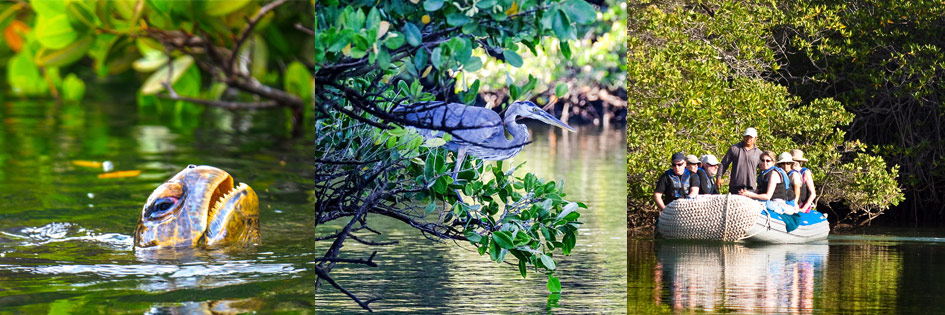
Visit Black Turtle Cove in the northern part of Santa Cruz. This inlet is surrounded by mangroves and is only accessible by dinghy. The shallow cove is a haven for young marine life. Black-tip and white-tip reef sharks, sea turtles, and a variety of rays are often spotted here.
 |
|
|---|---|
Black Turtle Cove, Santa Cruz Island |
|
Highlights & Animals: |
Baby hammerhead shark, rays, sea turtles, sea birds. |
Difficulty: |
Easy |
Type of Landing: |
No Landing |
Possible Activities: | pr |
Day 3: Thursday
In the morning:
Rabida
Rabida
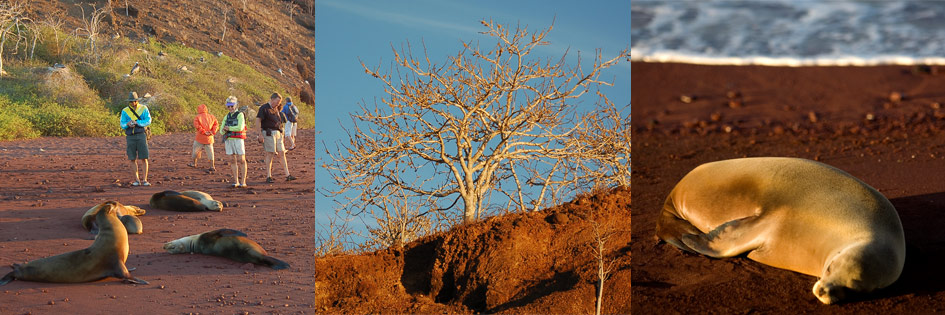
You will visit Rabida Island (or Jervis) which is one of the most colorful and volcanically varied islands in the archipelago as well as a great snorkeling site. We will start on Rabida’s famous maroon/red sand beach, and after an easy hike, you will arrive to a stunning lookout to enjoy the amazing landscapes. The island is a birdwatcher’s delight. Some species are abundant such as a few varieties of finches, Galapagos vermilion flycatchers, Galapagos hawks and brown pelicans.
 |
|
|---|---|
Rabida, Rabida Island |
|
Highlights & Animals: |
Snorkeling: white-cheeked pintail ducks, colourful fish, sea lions, brackish water lagoon, pelicans |
Difficulty: |
Easy/Moderate |
Type of Landing: |
Wet Landing |
Possible Activities: | ca, sn, pr, ky, pb |
In the afternoon:
Pinnacle Rock
Pinnacle Rock
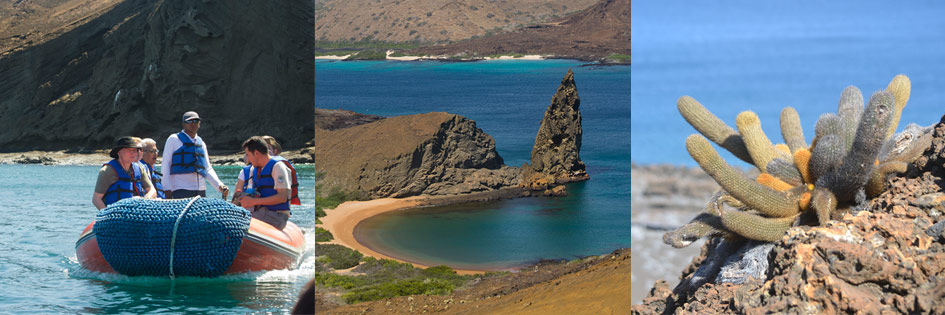
You will head to Bartholomew Island where the famous Pinnacle Rock is found. Bartholomew consists of an extinct volcano with a variety of red, orange, black and even green volcanic formations. We will take a trail of stairs to the summit of the volcano (about 30 or 40 minutes) where you will enjoy one of the best views of the islands! A beautiful beach surrounded by the only vegetation is perfect for snorkeling where you may even see and swim with Galapagos penguins.
 |
|
|---|---|
Pinnacle Rock, Bartholomew Island |
|
Highlights & Animals: |
Pinnacle Rock, panoramic view, moonlike landscape, penguins, pioneer plants, lava cactus; snorkeling: penguins, reef sharks, rays, and great colorful fish. |
Difficulty: |
Moderate/Difficult |
Type of Landing: |
Dry & Wet Landings |
Possible Activities: | ca, sn, pr |
Day 4: Friday
In the morning:
Sullivan Bay
Sullivan Bay
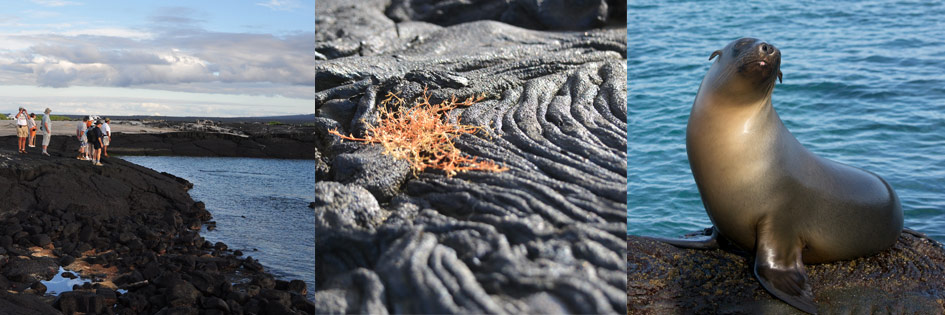
You will visit Sullivan Bay located on the southeast part of Santiago. This place is interesting for its geology because the area is covered by lava flows. This place has elevations in the form of small volcanoes formed by the lava flows.
 |
|
|---|---|
Sullivan Bay, Santiago Island |
|
Highlights & Animals: |
Lava flows, small volcanoes |
Difficulty: |
Easy/Moderate |
Type of Landing: |
Dry Landing |
Possible Activities: | ca, sn, pr |
In the afternoon:
Dragon Hill
Dragon Hill
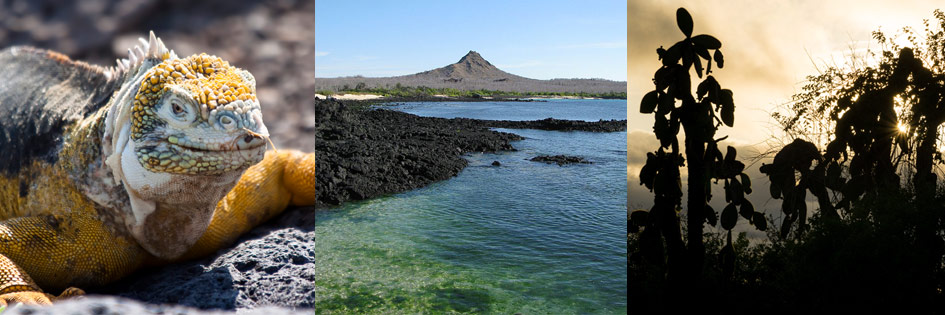
Situated on Santa Cruz Island, Dragon Hill is one of the newest visitor sites accessible to tourists in the Galapagos Islands. One of the lengthier Galapagos walking trails will lead visitors along a beach and up a trail to the lagoon lookout where bright flamingos, pintail ducks, and land iguanas can be spotted.
 |
|
|---|---|
Dragon Hill, Santa Cruz Island |
|
Highlights & Animals: |
Land iguana nesting spot, Galapagos flamingos, common stilts, palo santo trees and cacti forest |
Difficulty: |
Easy |
Type of Landing: |
Dry Landing |
Possible Activities: | ca, sn |
Day 5: Saturday
In the morning:
Highlands
Highlands
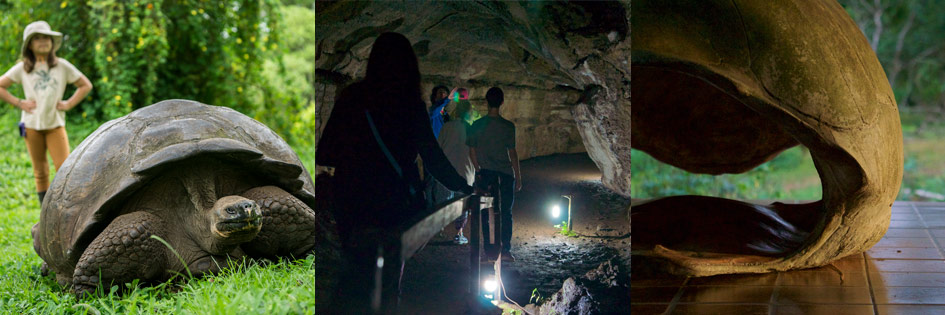
Accessible by bus from Puerto Ayora, the highlands of Santa Cruz are a deep green which contrast beautifully with the dry, lower part of the islands. The predominant vegetation in the highlands are Scalesia trees which create a lush green forest. The lava tunnels, over half a mile long, are underground and walking through them is a unique, surreal experience. At this place you’ll have lunch.
 |
|
|---|---|
Highlands, Santa Cruz Island |
|
Highlights & Animals: |
Lava tunnels, Finches, wild tortoises, tortoise nesting site. |
Difficulty: |
Easy |
Type of Landing: |
Dry Landing |
Possible Activities: | ca |
Afterwards:
Twin Craters
Twin Craters
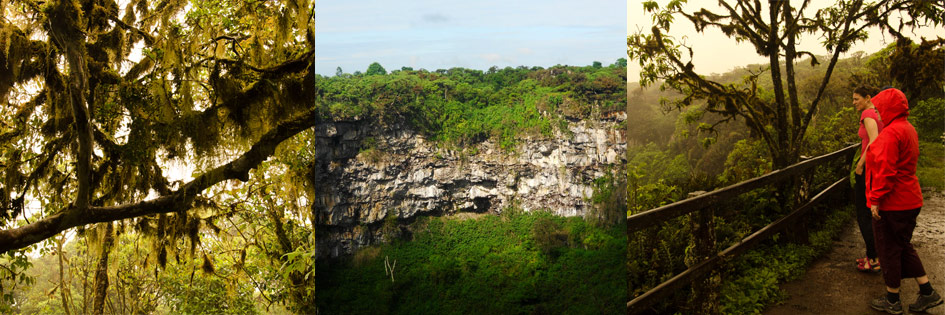
You will visit the Twin Craters located opposite to each other on both sides of the road leading from Puerto Ayora to Baltra. The name is only figurative; not real craters, these formations were created by the collapse of surface material in underground fissures and chambers. The view is breathtaking.
 |
|
|---|---|
Twin Craters, Santa Cruz Island |
|
Highlights & Animals: |
Pit craters, Scalesia Forest |
Difficulty: |
Easy |
Type of Landing: |
Dry Landing |
Possible Activities: | ca |
In the afternoon:
Fausto Llerena Breeding Center
Fausto Llerena Breeding Center
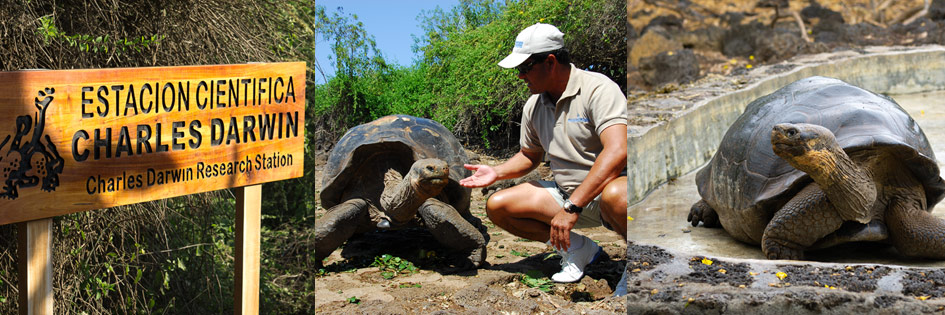
You will visit “Fausto Llerena” Tortoise Breeding Center in Puerto Ayora, where giant tortoises are bred in captivity. This is home to tortoises ranging from 3-inches (new hatchlings) to 4-feet long adults. Subspecies of the giant tortoises interact with one another, and many of the older tortoises are accustomed to humans stretching out their heads for a photo opportunity. The babies are kept until they are about four years-old and strong enough to survive on their own.
 |
|
|---|---|
Fausto Llerena Breeding Center, Santa Cruz Island |
|
Highlights & Animals: |
Giant tortoises, finches, Galapagos rails |
Difficulty: |
Easy |
Type of Landing: |
Dry Landing |
Possible Activities: | ca |
Day 6: Sunday
In the morning:
El Barranco
El Barranco
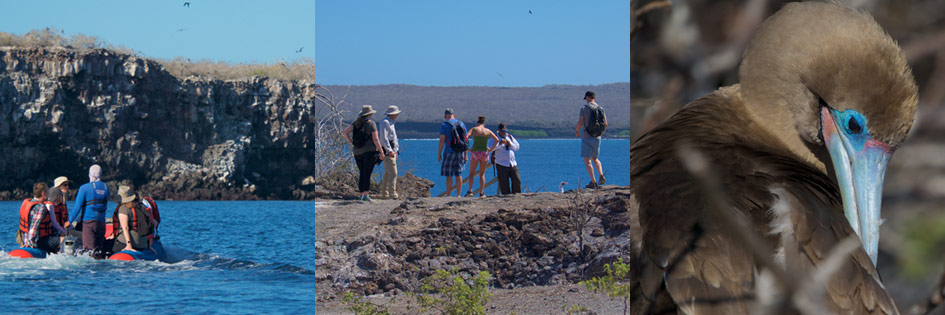
El Barranco, also known as Prince Phillip’s Steps, is a steep, rocky path that leads up a high cliff rock face. A marvelous view can be appreciated from here. This site is also home to Palo Santo vegetation as well as red-footed boobies, short-eared owls, Galapagos storm petrels, and Galapagos doves.
 |
|
|---|---|
El Barranco, Genovesa Island |
|
Highlights & Animals: |
Red-footed boobies, short-eared owls, storm-petrels, Galapagos doves |
Difficulty: |
Moderate |
Type of Landing: |
Dry Landing |
Possible Activities: | ca, sn, pr, ky, pb |
In the afternoon:
Darwin Bay
Darwin Bay
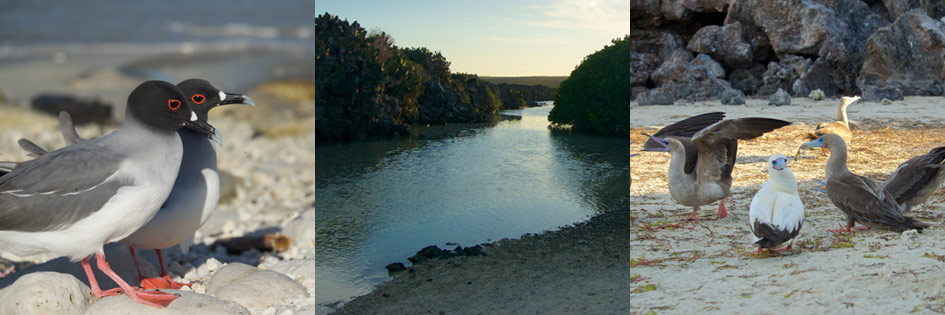
Visit the white-sand coral beach of Darwin Bay which includes a half mile trail (0,75km) that winds through mangroves filled with land birds. Nazca boobies, red-footed boobies, and swallow-tailed gulls, which can easily be spotted here. Further down the path we’ll find tidal pools where sea lions swim playfully. At the end is a spectacular view of a cliff.
 |
|
|---|---|
Darwin Bay, Genovesa Island |
|
Highlights & Animals: |
Nazca boobies, red-footed boobies, swallow-tail gulls, mangroves, coral pebble beach, snorkeling: rays, colorful reef fish, and hammerhead sharks occasionally |
Difficulty: |
Easy |
Type of Landing: |
Wet Landing |
Possible Activities: | ca, sn, pr, ky, pb |
Day 7: Monday
In the morning:
Espumilla Beach
Espumilla Beach
In Espumilla Beach marine iguanas lounge and the Sally Lightfoot crabs attract the hunting herons performing the dance of predator and prey right before your eyes. Snorkeling is highly recommended as you could come face to face with an octopus, moray eel, shark and a variety of other species of tropical fish.
 |
|
|---|---|
Espumilla Beach, Santiago Island |
|
Highlights & Animals: |
Snorkeling |
Difficulty: |
Easy |
Type of Landing: |
Wet Landing |
Possible Activities: | ca, sn, pr, ky, pb |
Or:
Buccaneer Cove
Buccaneer Cove
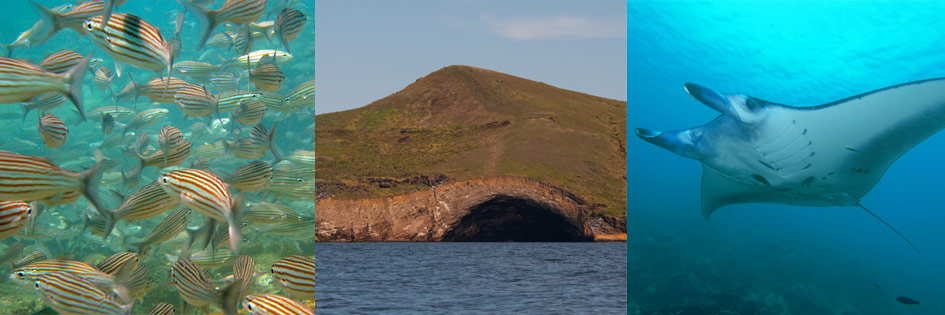
Buccaneer Cove is a testament to the fact that Santiago Island was once a refuge for British buccaneers. These pirates would anchor in the protected bay to make repairs and stock up on tortoise meat among other things. The steep cliffs, where hundreds of seabirds perch in front of the dark red sand beach, are a magnificent site.
 |
|
|---|---|
Buccaneer Cove, Santiago Island |
|
Highlights & Animals: |
Sea birds, historical site, snorkeling and rock formations |
Difficulty: |
Easy |
Type of Landing: |
No Landing |
Possible Activities: | sn, pr, ky, pb |
In the afternoon:
Egas Port
Egas Port
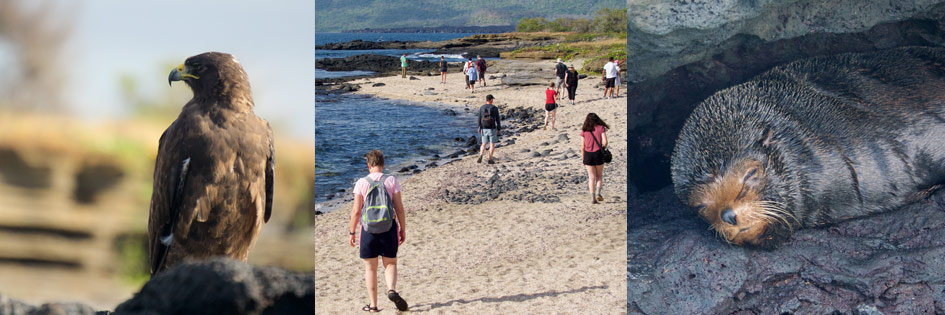
Egas Port, also known as James Bay, on Santiago Island is home to the curious Galapagos hawks and quick-footed Galapagos lava lizards. The trail leads to the coastline with gorgeous tide pools and grottos full of fauna. Here the Galapagos furseals bathe in the sun. This is also a great snorkeling site.
 |
|
|---|---|
Egas Port, Santiago Island |
|
Highlights & Animals: |
Furseals, Galapagos sea lions, tidal pools and grottos, Galapagos hawks, oyster catchers, marine iguanas, finches; snorkeling: reef sharks, turtles, rays, nice underwater formations. |
Difficulty: |
Easy/Moderate |
Type of Landing: |
Wet Landing |
Possible Activities: | ca, sn |
Day 8: Tuesday
In the morning:
Bachas Beach
Bachas Beach
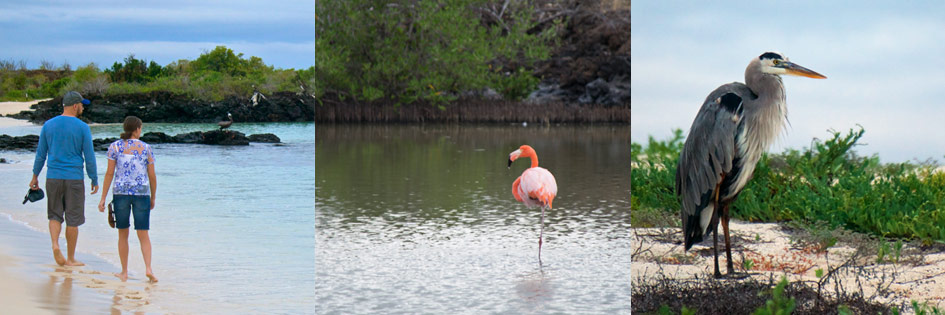
Bachas Beach is located on the north shore of Santa Cruz and is a beach for swimming. One of the few remnants of the U.S. World War II presence in the Galapagos, a floating pier, can be seen here. You may see flamingos, Sally Lightfoot crabs, hermit crabs, black-necked stilts, and whimbrels. Sea turtles also nest on the beach.
 |
|
|---|---|
Bachas Beach, Santa Cruz Island |
|
Highlights & Animals: |
World War II remnants. Sally Lightfoot crabs, hermit crabs, black necked stilts, whimbrels, sea turtles. |
Difficulty: |
Easy |
Type of Landing: |
Wet Landing |
Possible Activities: | ca, sn |
Afterwards:
Baltra Airport Departure
Baltra Airport Departure
After this final visit, you will be transferred to the Baltra airport in time for your flight back to the mainland.
Baltra Airport Departure |
|
|---|---|
Difficulty: |
N/A |
Type of Landing: |
N/A |