
Sea Star
6-day Cruise "C"
(Santa Cruz, Isabela, Fernandina, Isabela, Santiago, San Cristobal)
Day 1: Thursday
Santa Cruz Island
In the morning:
Baltra Airport Arrival
Morning flight from Quito or Guayaquil to Baltra, Galapagos Islands. After passing through immigration and baggage claim, you will be met by a Sea Star staff member and brought into a private bus to start your adventure in Galapagos.
Please note: Your first excursion in the Galapagos will be after being picked up at the airport upon arrival to the islands, before boarding the cruise. It is essential for you to arrive in the Galapagos wearing comfortable clothes, good closed-toe shoes suitable for an excursion, a long-brimmed hat, sun lotion, sunglasses, and to ensure you have your camera handy.
Baltra Airport Arrival |
|
|---|---|
Difficulty: |
Easy |
Type of Landing: |
Dry Landing |
 |
|
|---|---|
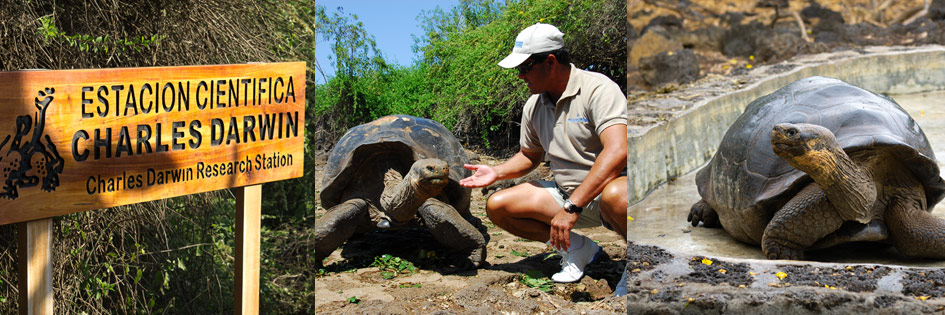
Fausto Llerena Breeding Center, Santa Cruz Island |
|
Highlights & Animals: |
Giant tortoises, finches, Galapagos rails |
Difficulty: |
Easy |
Type of Landing: |
Dry Landing |
Possible Activities: | Hiking |
Day 2: Friday
Isabela Island
In the morning:
Tintoreras Islet
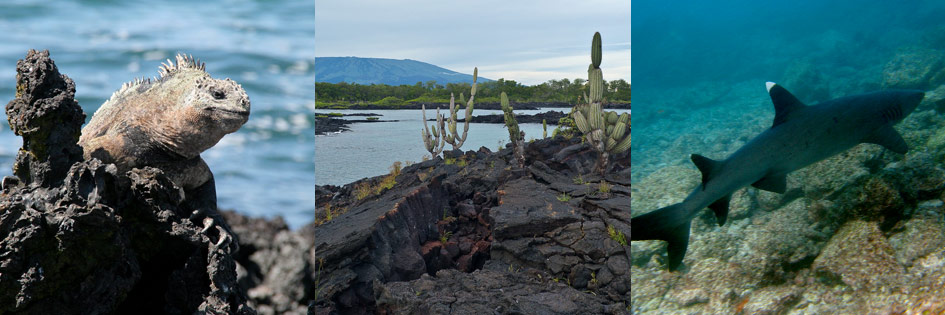
Tintoreras Islet, located a short distance from Puerto Villamil, is home to a great variety of wildlife. Its turquoise, crystalline waters are inhabited by white-tip reef sharks, Galapagos penguins, marine turtles and sea lions. One of its beaches surrounded by mangroves is one of the few sites where marine iguanas can reproduce successfully.
 |
|
|---|---|
Tintoreras Islet, Isabela Island |
|
Highlights & Animals: |
White-tipreef sharks, penguins, marine turtles, sea lions, marine iguanas |
Difficulty: |
Easy |
Type of Landing: |
Dry Landing |
Possible Activities: | Hiking, dinghy ride |
Afterwards:
Sierra Negra Volcano
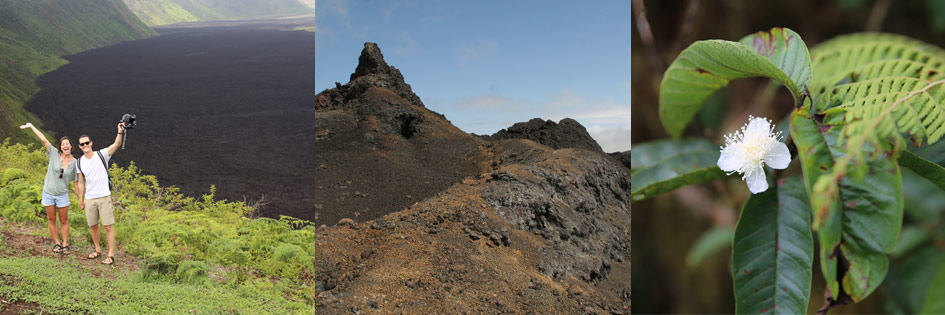
Visit to the Sierra Negra Volcano, which is the largest basaltic caldera in the Galapagos with a diameter of 6.2 miles (10 km). The site offers impressive views and the opportunity to observe up to seven species of finches and a rich display of vegetation. The north side of the caldera provides evidence of its most recent volcanic activity in 2005.
 |
|
|---|---|
Sierra Negra Volcano, Isabela Island |
|
Highlights & Animals: |
Basaltic caldera, stunning views, finches |
Difficulty: |
Difficult |
Type of Landing: |
Dry Landing |
Possible Activities: | Hiking |
In the afternoon:
Wetlands
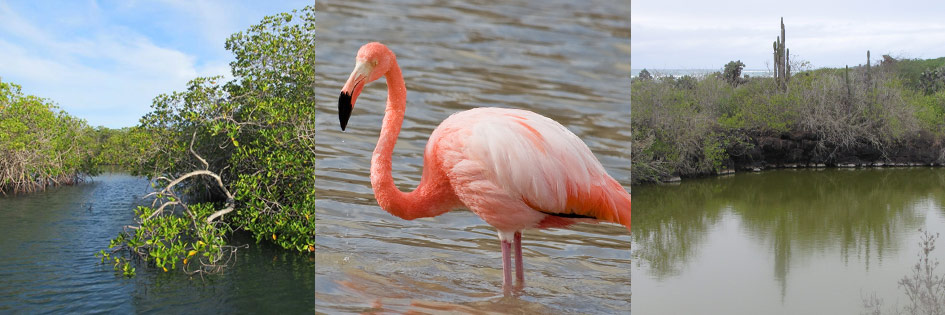
The Wetlands of Isabela Island are located just outside of Puerto Villamil. They consist of lagoons, swamps, and mangroves and are home to a variety of unique bird species such as common stilts, whimbrels, white-cheeked pintails, and gallinules. The Wetlands can be visited on foot via a path through the swamps.
 |
|
|---|---|
Wetlands, Isabela Island |
|
Highlights & Animals: |
Giant mangroves, shore birds, flamingos |
Difficulty: |
Easy |
Type of Landing: |
Dry Landing |
Possible Activities: | Hiking |
Day 3: Saturday
Isabela Island
In the morning:
Moreno Point
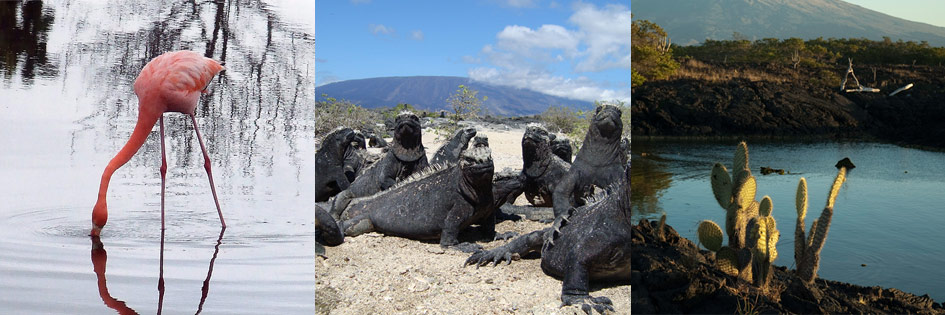
Moreno Point is located southwest of Elizabeth Bay. Here a dry landing onto what was once flowing lava is possible. The lava has left craters in its wake which formed crystal tide pools. By looking into the pools, you can peer into another world as the marine life drifts by your window. In the brackish pools of this area, you may see pink flamingos, white-cheeked pintails, and common gallinules. If you look carefully into the pools, you may see white-tip reef sharks and some sea turtles.
 |
|
|---|---|
Moreno Point, Isabela Island |
|
Highlights & Animals: |
Flamingos, gallinules, pintail ducks, turtles, white-tip reef sharks. |
Difficulty: |
Moderate/Difficult |
Type of Landing: |
Dry Landing |
Possible Activities: | Hiking, snorkeling, dinghy ride |
In the afternoon:
Elizabeth Bay
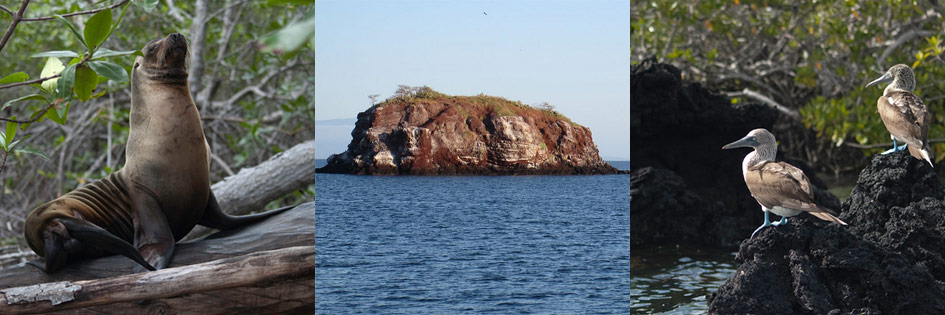
Elizabeth Bay is located on the east coast of Isabela Island. The bay contains many islets, which can be visited by dinghy. Penguins and blue-footed boobies can be spotted on the rocky islets. With an abundance of marine life and clear water, the area is perfect for snorkeling and viewing schools of colorful fish, sea lions, and perhaps even sharks.
 |
|
|---|---|
Elizabeth Bay, Isabela Island |
|
Highlights & Animals: |
Mangrove forest (unique in Galapagos), sea turtles, penguins, rays, herons and sea lions |
Difficulty: |
Easy/Moderate |
Type of Landing: |
Wet Landing |
Possible Activities: | Dinghy ride, kayaking |
Day 4: Sunday
Fernandina and Isabela Islands
In the morning:
Espinoza Point
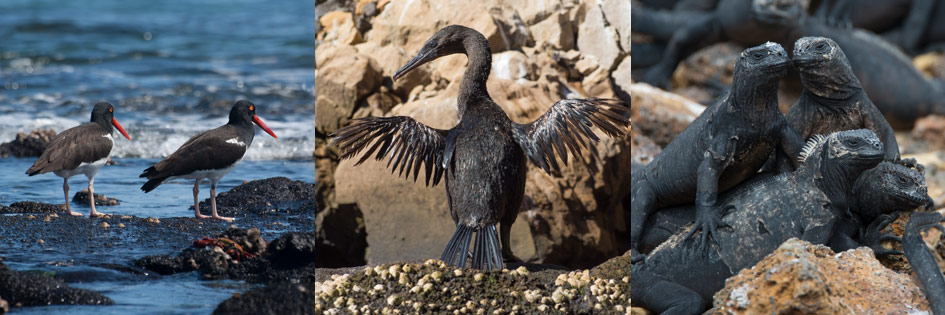
Crossing the Bolivar Channel that divides Isabela and Fernandina Islands, you will land at Espinoza Point, and after walking past a colony of marine iguanas and a group of sea lions, you will reach the island’s highlight: the flightless cormorant nesting site. This area also provides a great opportunity to see the Galapagos hawk.
 |
|
|---|---|
Espinoza Point, Fernandina Island |
|
Highlights & Animals: |
Flightless cormorant, marine iguanas, ‘a‘ā lava, sea lions, penguins, active volcano “La Cumbre”. |
Difficulty: |
Moderate |
Type of Landing: |
Dry Landing |
Possible Activities: | Hiking, snorkeling, dinghy ride |
In the afternoon:
Tagus Cove
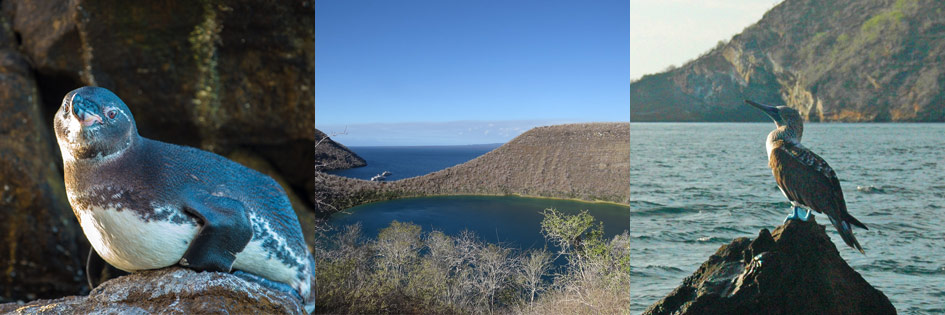
You will visit Tagus Cove on Isabela Island which is located across from Fernandina Island, near the Bolivar Channel dividing the two islands. This spot has been frequented by ships since the 1800s, using the area as an anchorage site. Trails winding by Lake Darwin up to a ridge display wonderful views.
 |
|
|---|---|
Tagus Cove, Isabela Island |
|
Highlights & Animals: |
Penguins, flightless cormorants, Darwin Volcano & Lake |
Difficulty: |
Moderate/Difficult |
Type of Landing: |
Dry Landing |
Possible Activities: | Hiking, snorkeling, dinghy ride, kayaking |
Day 5: Monday
Santiago Island
In the morning:
Espumilla Beach
In Espumilla Beach marine iguanas lounge and the Sally Lightfoot crabs attract the hunting herons performing the dance of predator and prey right before your eyes. Snorkeling is highly recommended as you could come face to face with an octopus, moray eel, shark and a variety of other species of tropical fish.
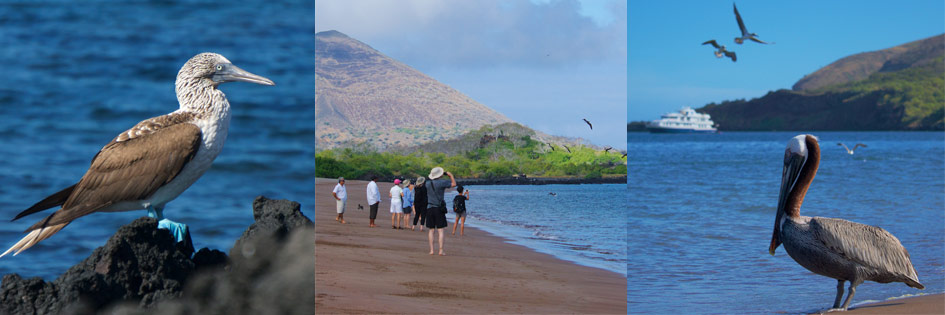 |
|
|---|---|
Espumilla Beach, Santiago Island |
|
Highlights & Animals: |
Snorkeling |
Difficulty: |
Easy |
Type of Landing: |
Wet Landing |
Possible Activities: | Hiking, snorkeling, dinghy ride, kayaking |
Or:
Buccaneer Cove
Buccaneer Cove is a testament to the fact that Santiago Island was once a refuge for British buccaneers. These pirates would anchor in the protected bay to make repairs and stock up on tortoise meat among other things. The steep cliffs, where hundreds of seabirds perch in front of the dark red sand beach, are a magnificent site.
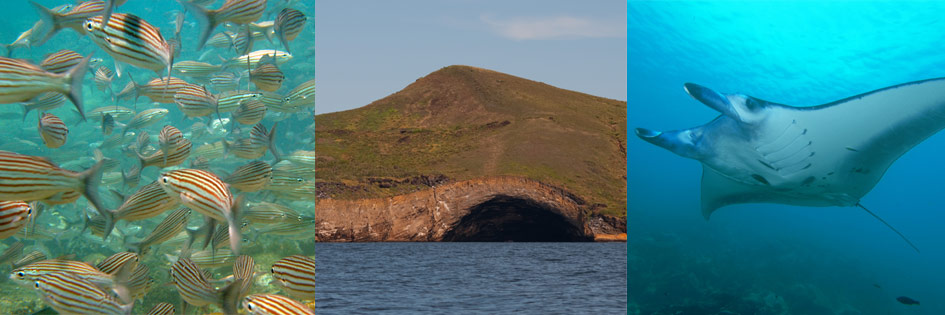 |
|
|---|---|
Buccaneer Cove, Santiago Island |
|
Highlights & Animals: |
Sea birds, historical site, snorkeling and rock formations |
Difficulty: |
Easy |
Type of Landing: |
No Landing |
Possible Activities: | Snorkeling, dinghy ride, kayaking |
In the afternoon:
Egas Port
Egas Port, also known as James Bay, on Santiago Island is home to the curious Galapagos hawks and quick-footed Galapagos lava lizards. The trail leads to the coastline with gorgeous tide pools and grottos full of fauna. Here the Galapagos furseals bathe in the sun. This is also a great snorkeling site.
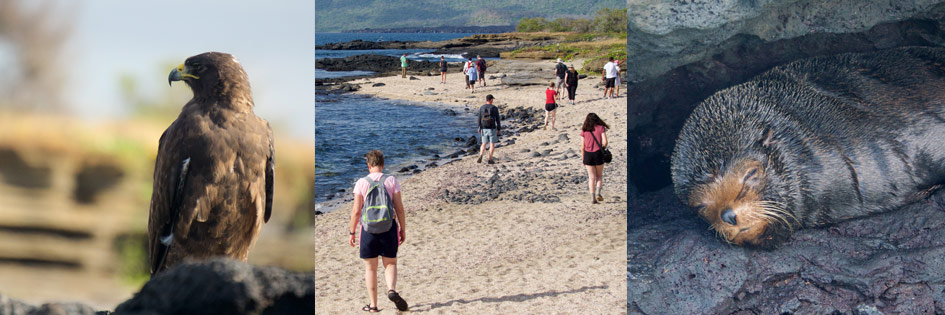 |
|
|---|---|
Egas Port, Santiago Island |
|
Highlights & Animals: |
Furseals, Galapagos sea lions, tidal pools and grottos, Galapagos hawks, oyster catchers, marine iguanas, finches; snorkeling: reef sharks, turtles, rays, nice underwater formations. |
Difficulty: |
Easy/Moderate |
Type of Landing: |
Wet Landing |
Possible Activities: | Hiking, snorkeling |
Day 6: Tuesday
San Cristobal Island
In the morning:
Lobos Island
You will take an excursion to Lobos Island which means “Sea Lion Island.” This appropriately named island is ripe with noisy, playful, jolly sea lions who will welcome you to their home with open, well, fins. This island also offers great snorkeling opportunities as well as the chance to see blue-footed and Nazca boobies.
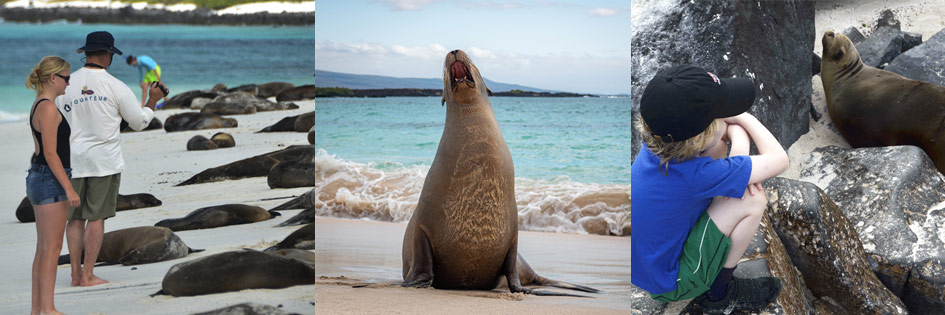 |
|
|---|---|
Lobos Island, San Cristobal Island |
|
Highlights & Animals: |
Sea lions, frigate birds, blue-footed boobies |
Difficulty: |
Easy/Moderate |
Type of Landing: |
Dry Landing |
Possible Activities: | Hiking, snorkeling, dinghy ride |
Afterwards:
San Cristobal airport departure
After this final visit, you will be transferred to the San Cristobal airport in time for your flight back to the mainland.
San Cristobal airport departure, San Cristobal Island |
|
|---|---|
Difficulty: |
Easy |
Type of Landing: |
Dry Landing |
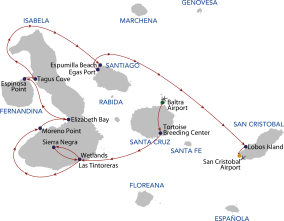
Itineraries are generally stable but may change due to weather, wildlife, safety, park regulations, guest abilities, or operational needs. Images shown are referential, and not all listed activities on each visitor point may be completed. Your guide and captain will always aim to choose the best possible itinerary.
www.seastargalapagos-cruise.com