
Natural Paradise
8-day Cruise "B"
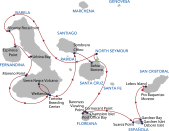
(North Seymour, Isabela, Fernandina, Isabela, Santiago, Santa Cruz, Floreana, Española, San Cristobal)
Day 1: Tuesday
North Seymour Island
In the morning:
Baltra Airport Arrival
Morning flight from Quito or Guayaquil to Baltra, Galapagos Islands.
You will arrive at Baltra Island in the morning. After passing through immigration and baggage claim, you will be met by a Natural Paradise staff member and transferred to the yacht. You will be shown to your cabin where you will have some time to settle in before lunch and a welcome briefing.
Baltra Airport Arrival |
|
|---|---|
Difficulty: |
N/A |
Type of Landing: |
N/A |
 |
|
|---|---|
North Seymour Island |
|
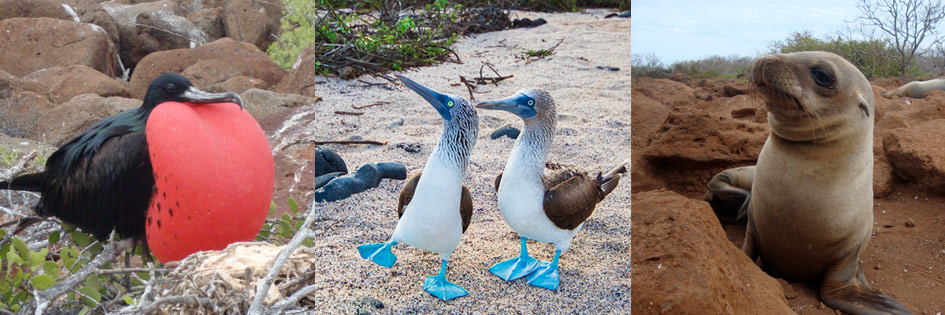
Highlights & Animals: |
Land & marine iguanas, frigate birds, blue-footed boobies, sea lions; snorkeling: rays, reef sharks, fish, garden eels. |
Difficulty: |
Moderate/Difficult |
Type of Landing: |
Dry Landing |
Possible Activities: | Hiking, snorkeling, dinghy ride |
Day 2: Wednesday
Isabela and Fernandina Islands
In the morning:
Vicente Roca Point
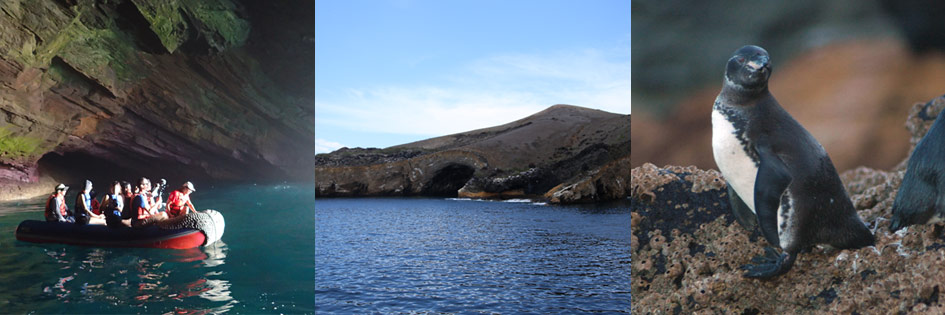
Comprised of two separate coves, Vicente Roca Point is a large bay with spectacular sea life. Keep an eye out for seahorses, sea turtles, and the strange yet fascinating Mola mola (or sun fish) while you snorkel.
 |
|
|---|---|
Vicente Roca Point, Isabela Island |
|
Highlights & Animals: |
Penguins, blue-footed boobies, terns, Nazca boobies, two types of sea lions. Sea turtles, rays and puffer fish. |
Difficulty: |
Easy/Moderate |
Type of Landing: |
No Landing |
Possible Activities: | Snorkeling, dinghy ride |
In the afternoon:
Espinoza Point
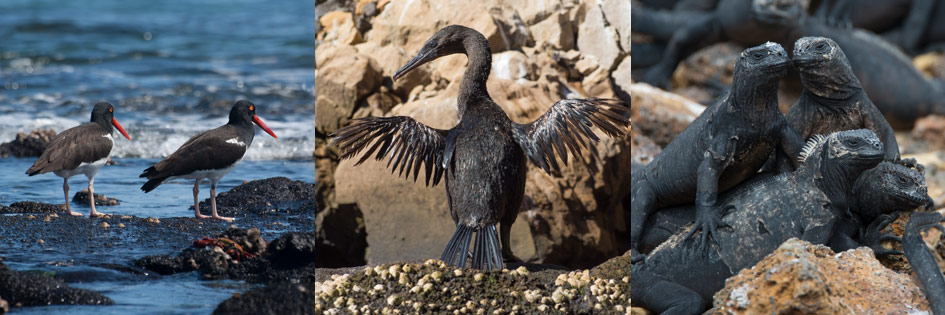
Crossing the Bolivar Channel that divides Isabela and Fernandina Islands, you will land at Espinoza Point, and after walking past a colony of marine iguanas and a group of sea lions, you will reach the island’s highlight: the flightless cormorant nesting site. This area also provides a great opportunity to see the Galapagos hawk.
 |
|
|---|---|
Espinoza Point, Fernandina Island |
|
Highlights & Animals: |
Flightless cormorant, marine iguanas, ‘a‘ā lava, sea lions, penguins, active volcano “La Cumbre”. |
Difficulty: |
Moderate |
Type of Landing: |
Dry Landing |
Possible Activities: | Hiking, snorkeling, dinghy ride |
Day 3: Thursday
Isabela Island
In the morning:
Urbina Bay
Urbina Bay is located at the base of Alcedo Volcano on the west coast between Tagus Cove and Elizabeth Bay. This area experienced a major uplift in 1954 causing the land to rise over 16 feet. The coast expanded half a mile out leaving marine life stranded on the new shore. This area is also a great place for snorkeling.
 |
|
|---|---|
Urbina Bay, Isabela Island |
|
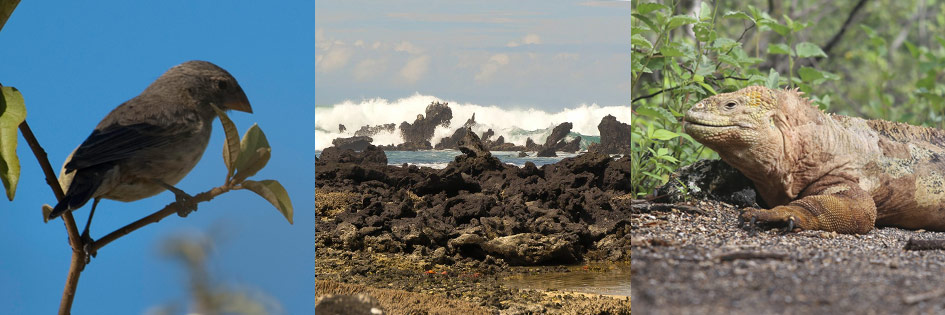
Highlights & Animals: |
Land iguanas (the biggest in the Galapagos), hawks, coral reef, giant tortoises; snorkeling: turtles, rays, tropical fish |
Difficulty: |
Easy/Moderate |
Type of Landing: |
Wet Landing |
Possible Activities: | Hiking, snorkeling |
In the afternoon:
Moreno Point
Moreno Point is located southwest of Elizabeth Bay. Here a dry landing onto what was once flowing lava is possible. The lava has left craters in its wake which formed crystal tide pools. By looking into the pools, you can peer into another world as the marine life drifts by your window. In the brackish pools of this area, you may see pink flamingos, white-cheeked pintails, and common gallinules. If you look carefully into the pools, you may see white-tip reef sharks and some sea turtles.
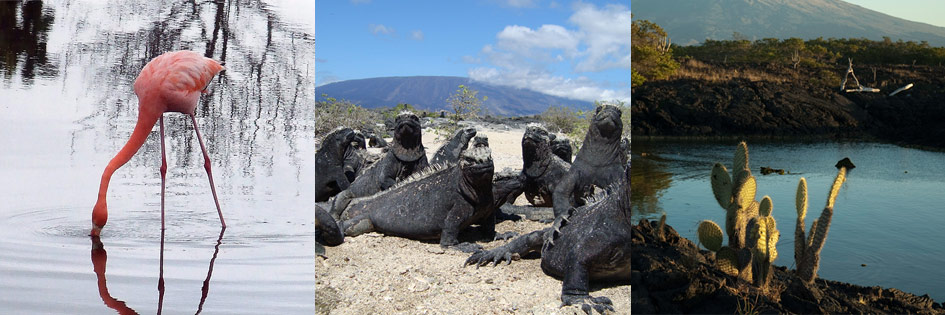 |
|
|---|---|
Moreno Point, Isabela Island |
|
Highlights & Animals: |
Flamingos, gallinules, pintail ducks, turtles, white-tip reef sharks. |
Difficulty: |
Moderate/Difficult |
Type of Landing: |
Dry Landing |
Possible Activities: | Hiking, snorkeling, dinghy ride |
Day 4: Friday
Isabela Island
In the morning:
Sierra Negra Volcano
Visit to the Sierra Negra Volcano, which is the largest basaltic caldera in the Galapagos with a diameter of 6.2 miles (10 km). The site offers impressive views and the opportunity to observe up to seven species of finches and a rich display of vegetation. The north side of the caldera provides evidence of its most recent volcanic activity in 2005.
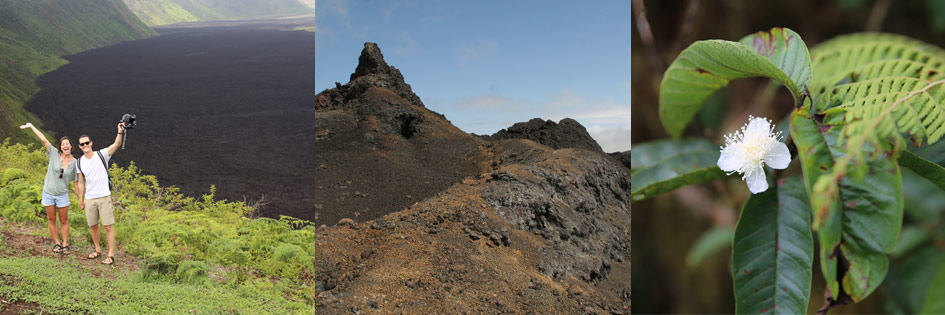 |
|
|---|---|
Sierra Negra Volcano, Isabela Island |
|
Highlights & Animals: |
Basaltic caldera, stunning views, finches |
Difficulty: |
Difficult |
Type of Landing: |
Dry Landing |
Possible Activities: | Hiking |
In the afternoon:
Wetlands
The Wetlands of Isabela Island are located just outside of Puerto Villamil. They consist of lagoons, swamps, and mangroves and are home to a variety of unique bird species such as common stilts, whimbrels, white-cheeked pintails, and gallinules. The Wetlands can be visited on foot via a path through the swamps.
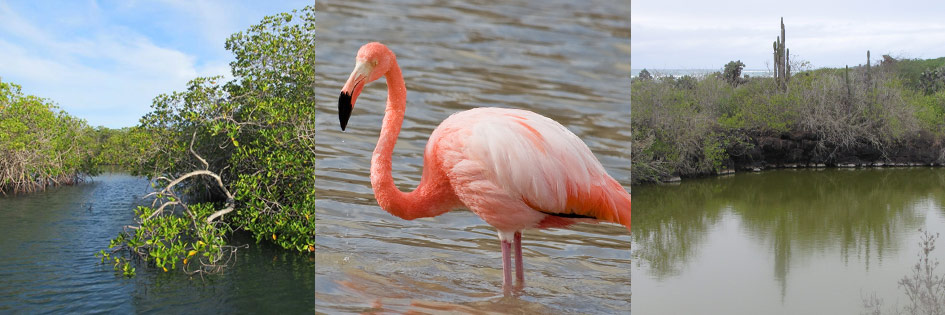 |
|
|---|---|
Wetlands, Isabela Island |
|
Highlights & Animals: |
Giant mangroves, shore birds, flamingos |
Difficulty: |
Easy |
Type of Landing: |
Dry Landing |
Possible Activities: | Hiking |
Afterwards:
Arnaldo Tupiza Breeding Center
Arnaldo Tupiza Breeding Center is located about one mile (1.5 km) from Puerto Villamil. Here, tortoise populations from South Isabela, Sierra Negra Volcano, Cerro Azul, Cazuela, Cinco Cerros, Roca Union, San Pedro, Tables and Cerro Paloma have been bred in captivity. In total there are 330 juvenile and adult tortoises.
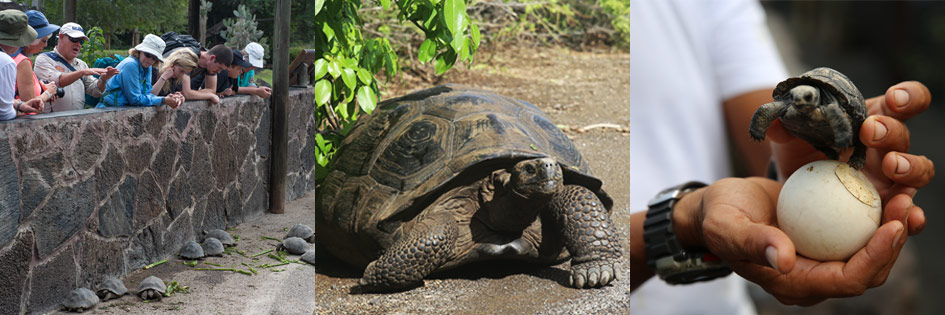 |
|
|---|---|
Arnaldo Tupiza Breeding Center, Isabela Island |
|
Highlights & Animals: |
Two of the five species of the giant tortoise |
Difficulty: |
Easy |
Type of Landing: |
Dry Landing |
Possible Activities: | Hiking |
Day 5: Saturday
Santiago and Santa Cruz Islands
In the morning:
Chinese Hat Islet
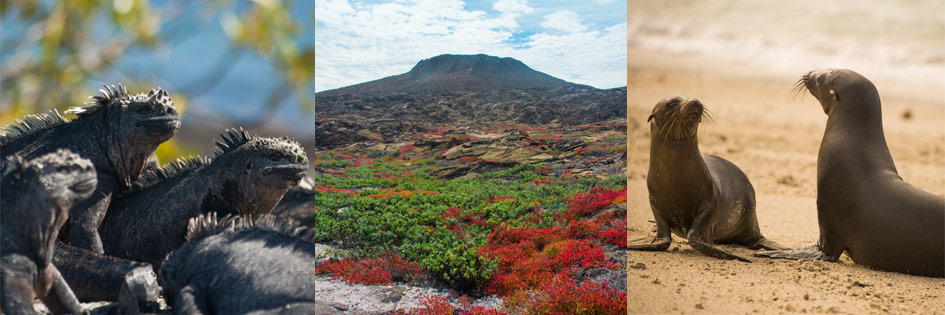
This small islet is located near the southeast coast of Santiago Island. Its name comes from the distinct shape of the islet’s summit. Chinese Islet is a great location to view many geological formations such as lava tunnels and lava flows. Some of the lava flows were formed underwater and subsequently raised above sea level. The presence of coral heads on the lava flow indicates this phenomenon.
 |
|
|---|---|
Chinese Hat Islet, Santiago Island |
|
Highlights & Animals: |
Lava formations, great site for snorkeling with an abundance of marine species such as sea lions, sharks, rays and penguins. |
Difficulty: |
Easy |
Type of Landing: |
Wet Landing |
Possible Activities: | Hiking, snorkeling, dinghy ride, kayaking |
In the afternoon:
Borrero Bay
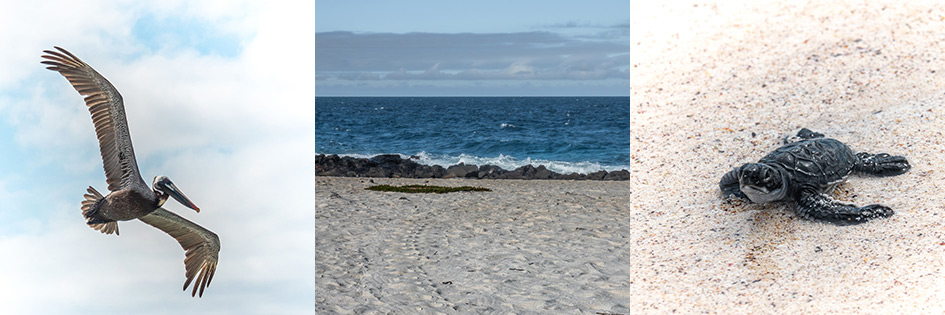
In the northern area of Santa Cruz Island, Bahía Borrero is a beautiful white coralline beach used as a nesting site by Green Sea turtles. This extinct volcano, due to its altitude, shows all the different zones of vegetation, changing from the littoral to the arid, and then with more moisture into the humid zone, to end in the dry pampa zone.
 |
|
|---|---|
Borrero Bay, Santa Cruz Island |
|
Highlights & Animals: |
It is an impressive landscape to enjoy while you swim in the turquoise waters of the bay or have a nice relaxing walk along the beach. |
Difficulty: |
Easy |
Type of Landing: |
Dry Landing |
Possible Activities: | Hiking, snorkeling |
Day 6: Sunday
Floreana Island
In the morning:
Baroness Viewing Point
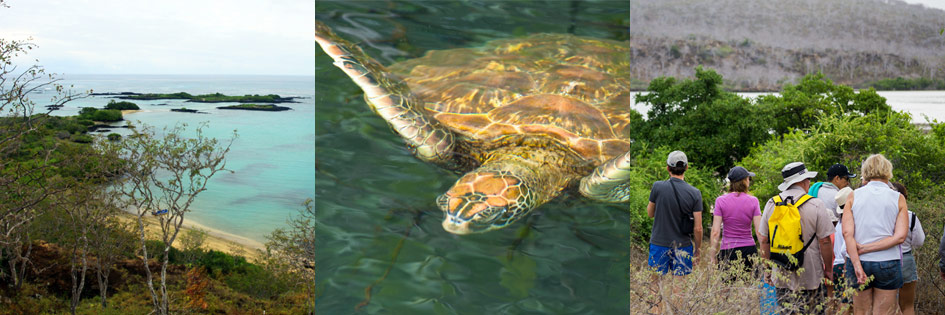
Baroness Viewing Point is a fantastic place to absorb the environment of the Galapagos. Once inhabited by an indulgent baroness and her three lovers, the history of this island is intriguing. The legends about this baroness are associated with a fascinating murder mystery. There are easy trails in this area for exploring the flora and fauna of Floreana.
 |
|
|---|---|
Baroness Viewing Point, Floreana Island |
|
Highlights & Animals: |
Great view, sea turtles, mysterious story about the first inhabitants of the islands |
Difficulty: |
Easy |
Type of Landing: |
Dry Landing |
Possible Activities: | Hiking, snorkeling, dinghy ride, kayaking, paddle board |
Afterwards:
Post Office Bay
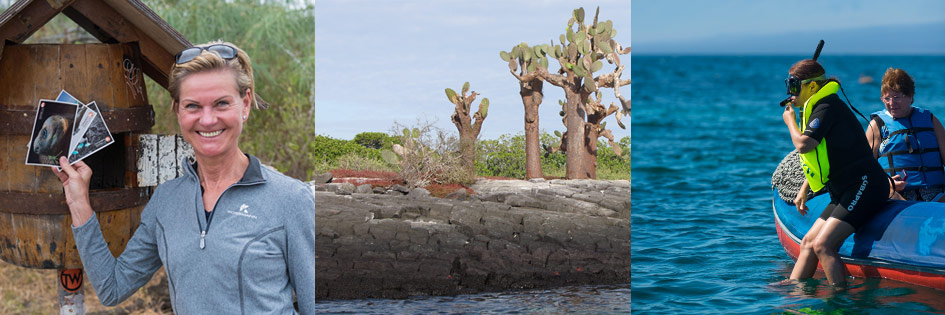
You will land on a beach and head to a spot where 18th century whalers placed a wooden barrel used as an unofficial mail box. The custom continues to this day with Galapagos visitors. So, don’t forget your postcards, and don’t be surprised if the post card arrives to its destination before you even get home!
 |
|
|---|---|
Post Office Bay, Floreana Island |
|
Highlights & Animals: |
Post office barrel, nice sandy beach |
Difficulty: |
Easy |
Type of Landing: |
Wet Landing |
Possible Activities: | Hiking, snorkeling |
In the afternoon:
Cormorant Point
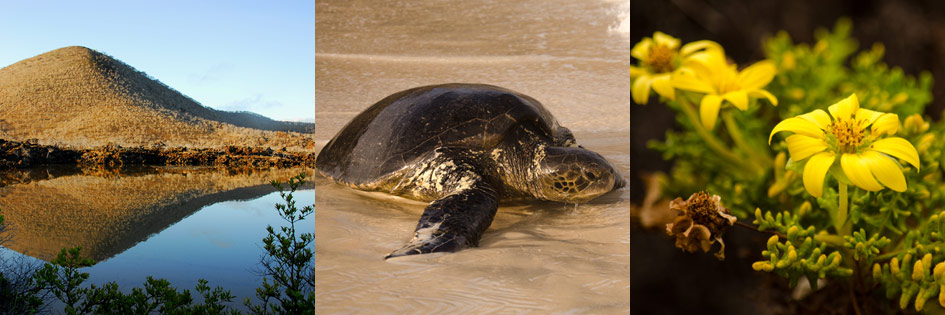
Cormorant Point hosts a large flamingo lagoon where other birds such as common stilts and white-cheeked pintails can also be seen. The beaches on this island are distinct: The Green Beach is named so due to its green color, which comes from a high percentage of olivine crystals in the sand, and the Flour Sand Beach is composed of white coral.
 |
|
|---|---|
Cormorant Point, Floreana Island |
|
Highlights & Animals: |
Flamingoes, green-colored beach |
Difficulty: |
Easy |
Type of Landing: |
Wet Landing |
Possible Activities: | Hiking, snorkeling, dinghy ride |
Afterwards:
Champion Islet
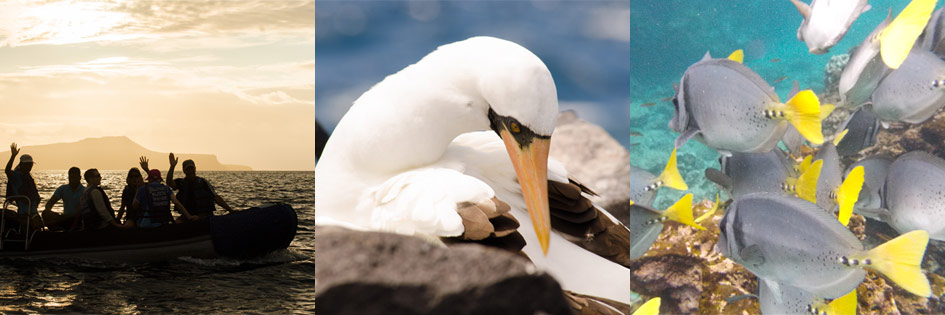
Champion Islet, named after the whaler Andrew Champion, is a small island located just offshore Floreana Island in the southern part of the Archipelago. Considered as one of the most beautiful places on Galapagos for all snorkeling fans and an excellent opportunity for dolphin watching.
 |
|
|---|---|
Champion Islet, Floreana Island |
|
Highlights & Animals: |
See lions, reef fish and Nazca boobies |
Difficulty: |
Moderate/Difficult |
Type of Landing: |
No Landing |
Possible Activities: | Snorkeling, dinghy ride |
Day 7: Monday
Española Island
In the morning:
Suarez Point
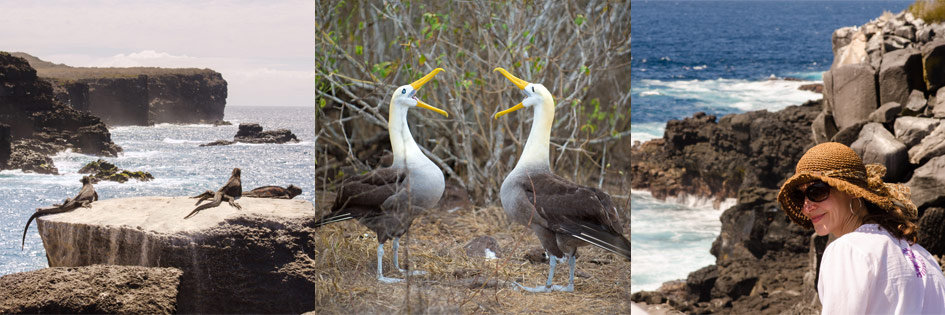
On the trail to Suarez Point you will have the chance to spot blue-footed boobies, albatrosses, and Nazca boobies. This island is the breeding site of nearly all of the world’s 12,000 pairs of waved albatrosses. You will also visit a beautiful site on the ocean front where there is a cliff that the large albatrosses use as a launching pad! You will have the chance to see the famous blowhole that spurts sea water into the air. The landscape is great for photography.
 |
|
|---|---|
Suarez Point, Española Island |
|
Highlights & Animals: |
Hood mockingbirds, Nazca boobies, waved albatrosses (approximately from the last week of April until the last week of January), red-billed tropicbirds, lava lizards, Galapagos hawks, blowhole, amazing landscape and maybe blue-footed boobies. |
Difficulty: |
Difficult |
Type of Landing: |
Dry Landing |
Possible Activities: | Hiking |
In the afternoon:
Gardner Bay, Gardner Islet & Osborn Islet
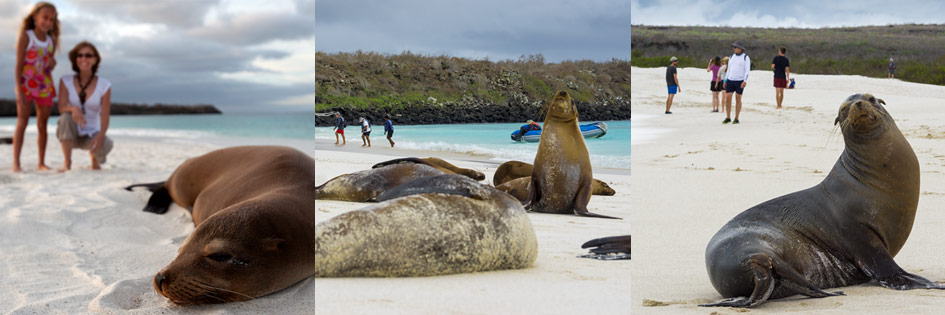
This excursion takes you to the spectacular Gardner Bay. After landing, you can walk across a lovely white-sand beach amongst a busy sea lion colony or dive into the water to swim with sea lion pups. You may also see curious mockingbirds on the beach.
 |
|
|---|---|
Gardner Bay, Gardner Islet & Osborn Islet, Española Island |
|
Highlights & Animals: |
White sandy beach, sea lions, mockingbirds; snorkeling: colorful fish, sea lion nursery |
Difficulty: |
Easy |
Type of Landing: |
Wet Landing |
Possible Activities: | Hiking, snorkeling, dinghy ride, kayaking, paddle board |
Day 8: Tuesday
San Cristobal Island
In the morning:
Lobos Island
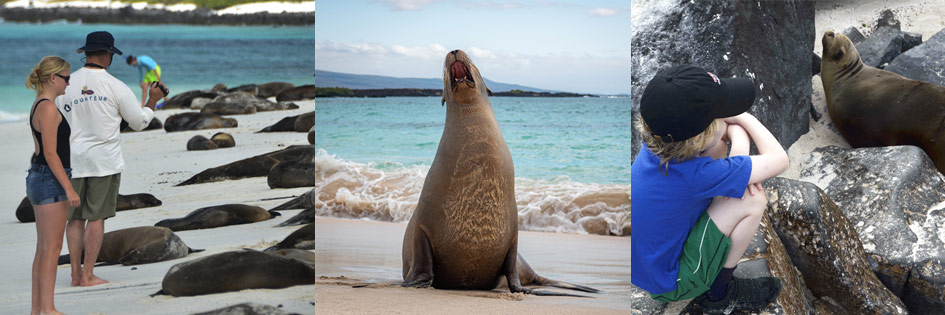
You will take an excursion to Lobos Island which means “Sea Lion Island.” This appropriately named island is ripe with noisy, playful, jolly sea lions who will welcome you to their home with open, well, fins. This island also offers great snorkeling opportunities as well as the chance to see blue-footed and Nazca boobies.
 |
|
|---|---|
Lobos Island, San Cristobal Island |
|
Highlights & Animals: |
Sea lions, frigate birds, blue-footed boobies |
Difficulty: |
Easy/Moderate |
Type of Landing: |
Dry Landing |
Possible Activities: | Hiking, snorkeling, dinghy ride |
Afterwards:
San Cristobal airport departure
After this final visit, you will be transferred to the San Cristobal airport in time for your flight back to the mainland.
San Cristobal airport departure, San Cristobal Island |
|
|---|---|
Difficulty: |
Easy |
Type of Landing: |
Dry Landing |
Itineraries are generally stable but may change due to weather, wildlife, safety, park regulations, guest abilities, or operational needs. Images shown are referential, and not all listed activities on each visitor point may be completed. Your guide and captain will always aim to choose the best possible itinerary.
www.naturalparadise-cruise.com