Natural Paradise
4-day Cruise "A"
(Santa Cruz, Genovesa, Santiago, Santa Cruz)
Day 1: Saturday
Santa Cruz Island
In the morning:
Baltra Airport Arrival
Morning flight from Quito or Guayaquil to Baltra, Galapagos Islands. After passing through immigration and baggage claim, you will be met by a Natural Paradise staff member and brought into a private bus to start your adventure in Galapagos.
Please note: Your first excursion in the Galapagos will be after being picked up at the airport upon arrival to the islands, before boarding the cruise. It is essential for you to arrive in the Galapagos wearing comfortable clothes, good closed-toe shoes suitable for an excursion, a long-brimmed hat, sun lotion, sunglasses, and to ensure you have your camera handy.
Baltra Airport Arrival |
|
|---|---|
Difficulty: |
Easy |
Type of Landing: |
Dry Landing |
 |
|
|---|---|
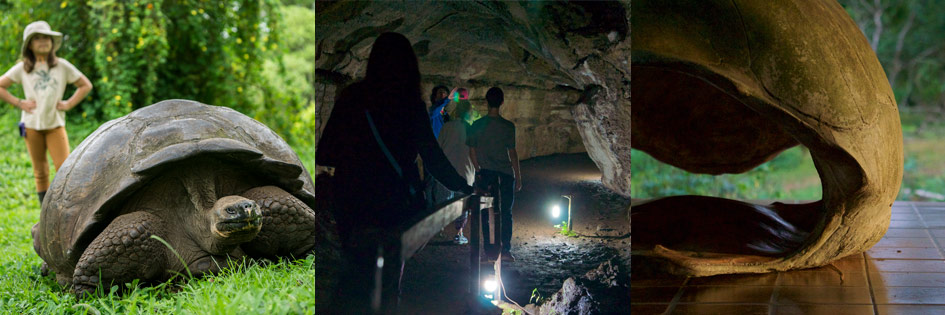
Highlands, Santa Cruz Island |
|
Highlights & Animals: |
Lava tunnels, Finches, wild tortoises, tortoise nesting site. |
Difficulty: |
Easy |
Type of Landing: |
Dry Landing |
Possible Activities: | Hiking |
In the afternoon:
Fausto Llerena Breeding Center
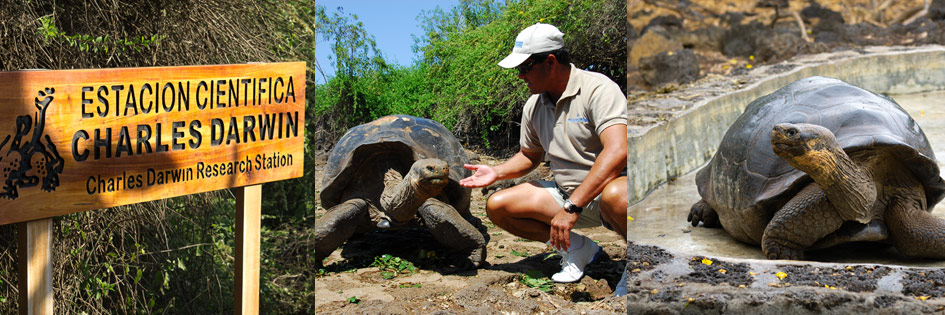
You will visit “Fausto Llerena” Tortoise Breeding Center in Puerto Ayora, where giant tortoises are bred in captivity. This is home to tortoises ranging from 3-inches (new hatchlings) to 4-feet long adults. Subspecies of the giant tortoises interact with one another, and many of the older tortoises are accustomed to humans stretching out their heads for a photo opportunity. The babies are kept until they are about four years-old and strong enough to survive on their own.
 |
|
|---|---|
Fausto Llerena Breeding Center, Santa Cruz Island |
|
Highlights & Animals: |
Giant tortoises, finches, Galapagos rails |
Difficulty: |
Easy |
Type of Landing: |
Dry Landing |
Possible Activities: | Hiking |
Day 2: Sunday
Genovesa Island
In the morning:
El Barranco
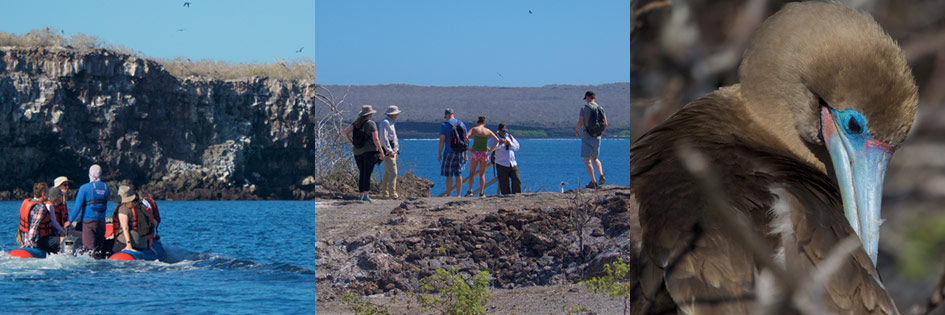
El Barranco, also known as Prince Phillip’s Steps, is a steep, rocky path that leads up a high cliff rock face. A marvelous view can be appreciated from here. This site is also home to Palo Santo vegetation as well as red-footed boobies, short-eared owls, Galapagos storm petrels, and Galapagos doves.
 |
|
|---|---|
El Barranco, Genovesa Island |
|
Highlights & Animals: |
Red-footed boobies, short-eared owls, storm-petrels, Galapagos doves |
Difficulty: |
Moderate |
Type of Landing: |
Dry Landing |
Possible Activities: | Hiking, snorkeling, dinghy ride, kayaking, paddle board |
In the afternoon:
Darwin Bay
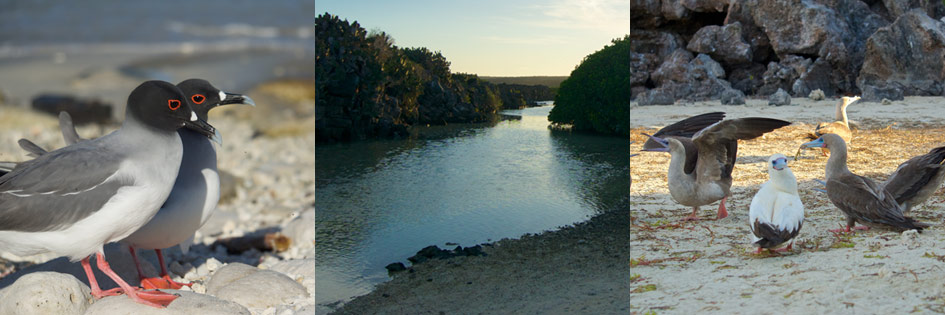
Visit the white-sand coral beach of Darwin Bay which includes a half mile trail (0,75km) that winds through mangroves filled with land birds. Nazca boobies, red-footed boobies, and swallow-tailed gulls, which can easily be spotted here. Further down the path we’ll find tidal pools where sea lions swim playfully. At the end is a spectacular view of a cliff.
 |
|
|---|---|
Darwin Bay, Genovesa Island |
|
Highlights & Animals: |
Nazca boobies, red-footed boobies, swallow-tail gulls, mangroves, coral pebble beach, snorkeling: rays, colorful reef fish, and hammerhead sharks occasionally |
Difficulty: |
Easy |
Type of Landing: |
Wet Landing |
Possible Activities: | Hiking, snorkeling, dinghy ride, kayaking, paddle board |
Day 3: Monday
Santiago Island
In the morning:
Espumilla Beach
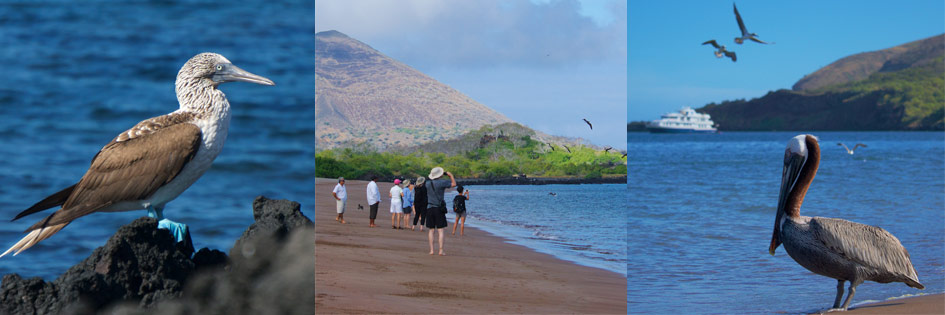
In Espumilla Beach marine iguanas lounge and the Sally Lightfoot crabs attract the hunting herons performing the dance of predator and prey right before your eyes. Snorkeling is highly recommended as you could come face to face with an octopus, moray eel, shark and a variety of other species of tropical fish.
 |
|
|---|---|
Espumilla Beach, Santiago Island |
|
Highlights & Animals: |
Snorkeling |
Difficulty: |
Easy |
Type of Landing: |
Wet Landing |
Possible Activities: | Hiking, snorkeling, dinghy ride, kayaking, paddle board |
Afterwards:
Buccaneer Cove
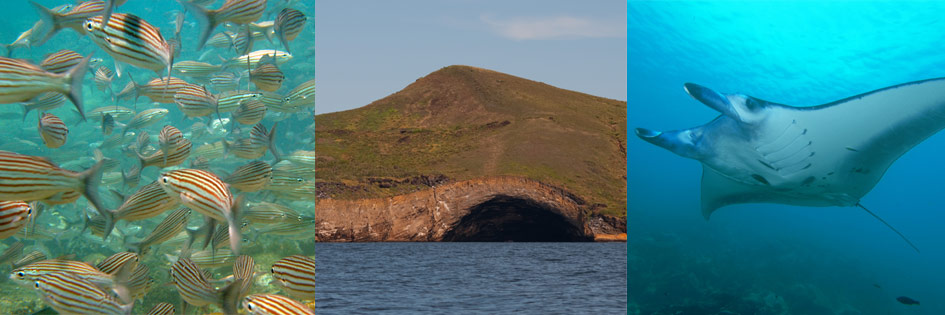
Buccaneer Cove is a testament to the fact that Santiago Island was once a refuge for British buccaneers. These pirates would anchor in the protected bay to make repairs and stock up on tortoise meat among other things. The steep cliffs, where hundreds of seabirds perch in front of the dark red sand beach, are a magnificent site.
 |
|
|---|---|
Buccaneer Cove, Santiago Island |
|
Highlights & Animals: |
Sea birds, historical site, snorkeling and rock formations |
Difficulty: |
Easy |
Type of Landing: |
No Landing |
Possible Activities: | Snorkeling, dinghy ride, kayaking, paddle board |
In the afternoon:
Egas Port
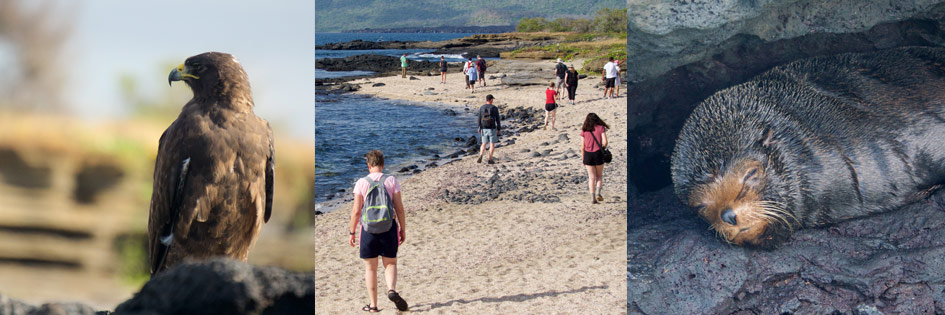
Egas Port, also known as James Bay, on Santiago Island is home to the curious Galapagos hawks and quick-footed Galapagos lava lizards. The trail leads to the coastline with gorgeous tide pools and grottos full of fauna. Here the Galapagos furseals bathe in the sun. This is also a great snorkeling site.
 |
|
|---|---|
Egas Port, Santiago Island |
|
Highlights & Animals: |
Furseals, Galapagos sea lions, tidal pools and grottos, Galapagos hawks, oyster catchers, marine iguanas, finches; snorkeling: reef sharks, turtles, rays, nice underwater formations. |
Difficulty: |
Easy/Moderate |
Type of Landing: |
Wet Landing |
Possible Activities: | Hiking, snorkeling |
Day 4: Tuesday
Santa Cruz Island
In the morning:
Bachas Beach
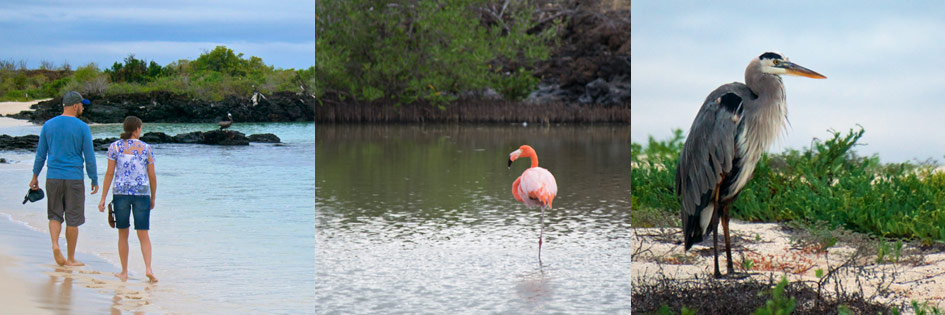
Bachas Beach is located on the north shore of Santa Cruz and is a beach for swimming. One of the few remnants of the U.S. World War II presence in the Galapagos, a floating pier, can be seen here. You may see flamingos, Sally Lightfoot crabs, hermit crabs, black-necked stilts, and whimbrels. Sea turtles also nest on the beach.
 |
|
|---|---|
Bachas Beach, Santa Cruz Island |
|
Highlights & Animals: |
World War II remnants. Sally Lightfoot crabs, hermit crabs, black necked stilts, whimbrels, sea turtles. |
Difficulty: |
Easy |
Type of Landing: |
Wet Landing |
Possible Activities: | Hiking, snorkeling |
Afterwards:
Baltra Airport Departure
After this final visit, you will be transferred to the Baltra airport in time for your flight back to the mainland.
Baltra Airport Departure |
|
|---|---|
Difficulty: |
N/A |
Type of Landing: |
N/A |
Itineraries are generally stable but may change due to weather, wildlife, safety, park regulations, guest abilities, or operational needs. Images shown are referential, and not all listed activities on each visitor point may be completed. Your guide and captain will always aim to choose the best possible itinerary.
www.naturalparadise-cruise.com