
Infinity
8-day Cruise "A"
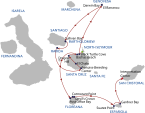
(Santa Cruz, Genovesa, Santiago, Rabida, Santa Cruz, Floreana, Española, San Cristobal)
Day 1: Tuesday
Santa Cruz Island
In the morning:
Baltra Airport Arrival
Morning flight from Quito or Guayaquil to Baltra, Galapagos Islands.
You will arrive at Baltra Island in the morning. After passing through immigration and baggage claim, you will be met by a Infinity staff member and transferred to the yacht. You will be shown to your cabin where you will have some time to settle in before lunch and a welcome briefing.
Baltra Airport Arrival |
|
|---|---|
Difficulty: |
N/A |
Type of Landing: |
N/A |
 |
|
|---|---|
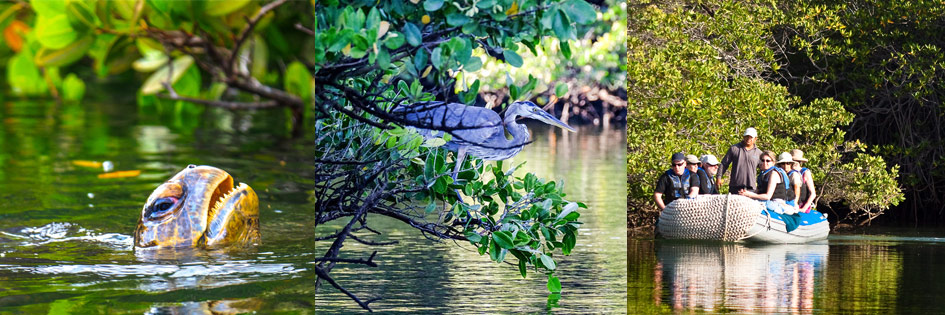
Black Turtle Cove, Santa Cruz Island |
|
Highlights & Animals: |
Baby hammerhead shark, rays, sea turtles, sea birds. |
Difficulty: |
Easy |
Type of Landing: |
No Landing |
Possible Activities: | Dinghy ride |
Day 2: Wednesday
Genovesa Island
In the morning:
El Barranco
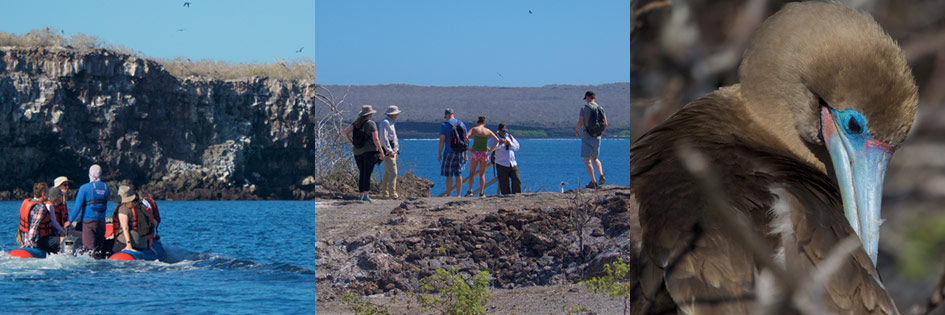
El Barranco, also known as Prince Phillip’s Steps, is a steep, rocky path that leads up a high cliff rock face. A marvelous view can be appreciated from here. This site is also home to Palo Santo vegetation as well as red-footed boobies, short-eared owls, Galapagos storm petrels, and Galapagos doves.
 |
|
|---|---|
El Barranco, Genovesa Island |
|
Highlights & Animals: |
Red-footed boobies, short-eared owls, storm-petrels, Galapagos doves |
Difficulty: |
Moderate |
Type of Landing: |
Dry Landing |
Possible Activities: | Hiking, snorkeling, dinghy ride, kayaking |
In the afternoon:
Darwin Bay
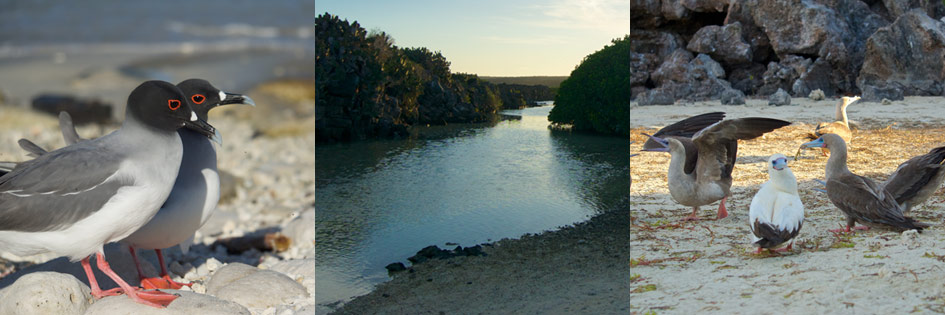
Visit the white-sand coral beach of Darwin Bay which includes a half mile trail (0,75km) that winds through mangroves filled with land birds. Nazca boobies, red-footed boobies, and swallow-tailed gulls, which can easily be spotted here. Further down the path we’ll find tidal pools where sea lions swim playfully. At the end is a spectacular view of a cliff.
 |
|
|---|---|
Darwin Bay, Genovesa Island |
|
Highlights & Animals: |
Nazca boobies, red-footed boobies, swallow-tail gulls, mangroves, coral pebble beach, snorkeling: rays, colorful reef fish, and hammerhead sharks occasionally |
Difficulty: |
Easy |
Type of Landing: |
Wet Landing |
Possible Activities: | Hiking, snorkeling, dinghy ride, kayaking |
Day 3: Thursday
Santiago and Rabida Islands
In the morning:
Sullivan Bay
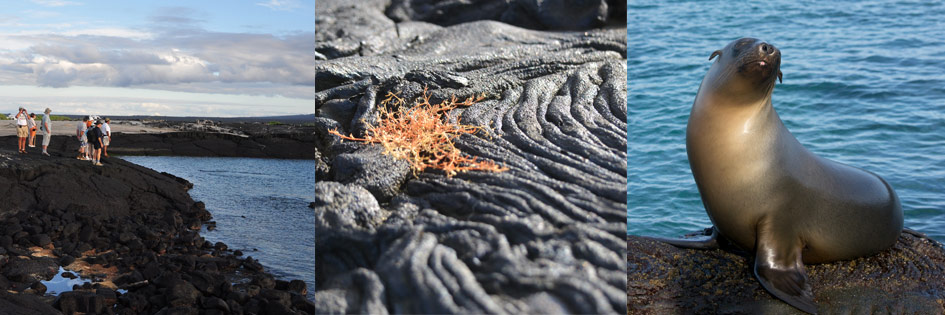
You will visit Sullivan Bay located on the southeast part of Santiago. This place is interesting for its geology because the area is covered by lava flows. This place has elevations in the form of small volcanoes formed by the lava flows.
 |
|
|---|---|
Sullivan Bay, Santiago Island |
|
Highlights & Animals: |
Lava flows, small volcanoes |
Difficulty: |
Easy/Moderate |
Type of Landing: |
Dry Landing |
Possible Activities: | Hiking, snorkeling, dinghy ride |
In the afternoon:
Rabida
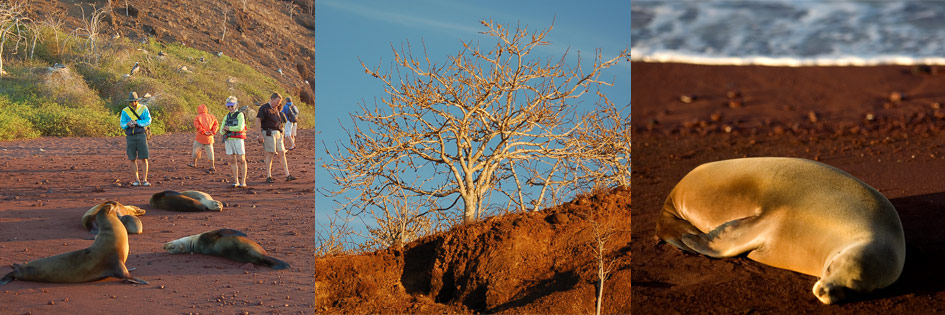
You will visit Rabida Island (or Jervis) which is one of the most colorful and volcanically varied islands in the archipelago as well as a great snorkeling site. We will start on Rabida’s famous maroon/red sand beach, and after an easy hike, you will arrive to a stunning lookout to enjoy the amazing landscapes. The island is a birdwatcher’s delight. Some species are abundant such as a few varieties of finches, Galapagos vermilion flycatchers, Galapagos hawks and brown pelicans.
 |
|
|---|---|
Rabida Island |
|
Highlights & Animals: |
Snorkeling: white-cheeked pintail ducks, colourful fish, sea lions, brackish water lagoon, pelicans |
Difficulty: |
Easy/Moderate |
Type of Landing: |
Wet Landing |
Possible Activities: | Hiking, snorkeling, dinghy ride, kayaking |
Day 4: Friday
Santa Cruz Island
In the morning:
Fausto Llerena Breeding Center
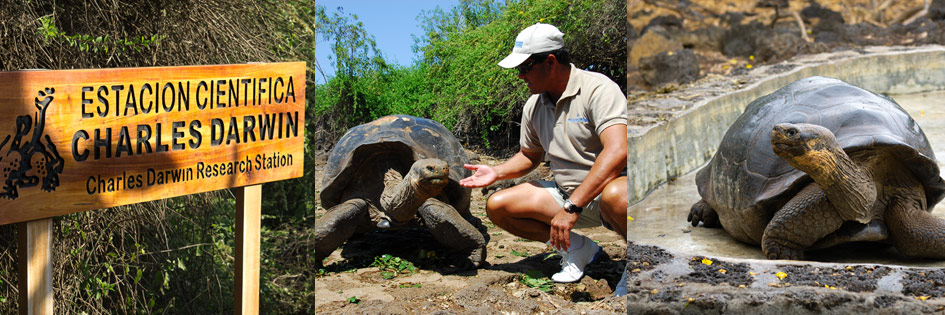
You will visit “Fausto Llerena” Tortoise Breeding Center in Puerto Ayora, where giant tortoises are bred in captivity. This is home to tortoises ranging from 3-inches (new hatchlings) to 4-feet long adults. Subspecies of the giant tortoises interact with one another, and many of the older tortoises are accustomed to humans stretching out their heads for a photo opportunity. The babies are kept until they are about four years-old and strong enough to survive on their own.
 |
|
|---|---|
Fausto Llerena Breeding Center, Santa Cruz Island |
|
Highlights & Animals: |
Giant tortoises, finches, Galapagos rails |
Difficulty: |
Easy |
Type of Landing: |
Dry Landing |
Possible Activities: | Hiking |
In the afternoon:
El Chato
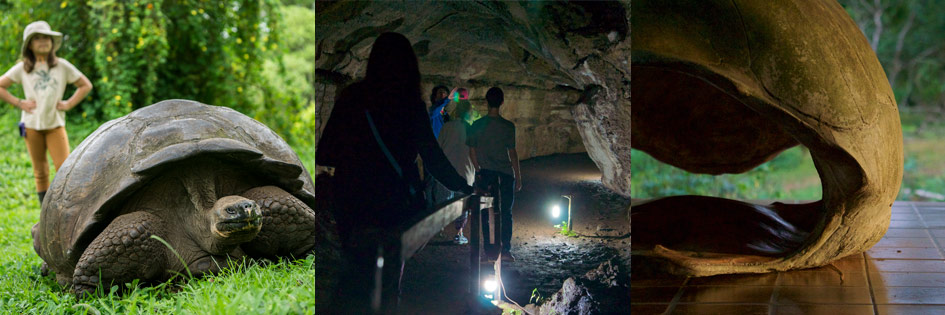
Located about 22 km from Puerto Ayora, the El Chato Reserve is divided into two areas: Caseta and Chato. Visitors typically begin their visit near the highland town of Santa Rosa. The Caseta route offers a more rugged path, while Chato is more accessible. The reserve is an excellent place to observe giant tortoises roaming freely during the dry season, along with other native wildlife like short-eared owls, Darwin’s finches, yellow warblers, Galapagos rails, and paint-billed crakes.
 |
|
|---|---|
El Chato, Santa Cruz Island |
|
Highlights & Animals: |
Giant tortoises, finches, Galapagos rails |
Difficulty: |
Easy/Moderate |
Type of Landing: |
Dry Landing |
Possible Activities: | Hiking |
Day 5: Saturday
Santa Cruz Island
In the morning:
Dragon Hill
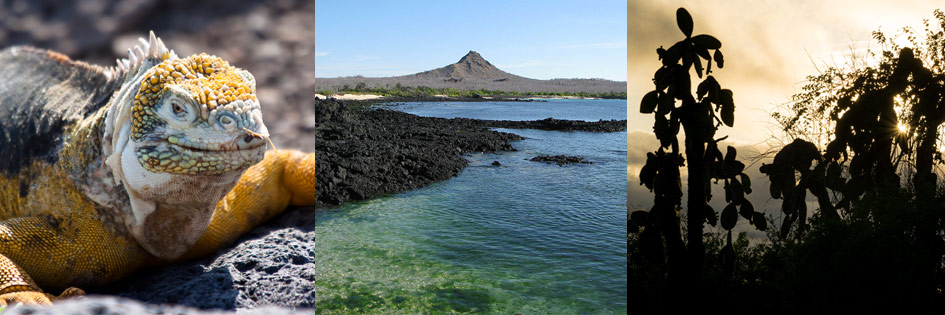
Situated on Santa Cruz Island, Dragon Hill is one of the newest visitor sites accessible to tourists in the Galapagos Islands. One of the lengthier Galapagos walking trails will lead visitors along a beach and up a trail to the lagoon lookout where bright flamingos, pintail ducks, and land iguanas can be spotted.
 |
|
|---|---|
Dragon Hill, Santa Cruz Island |
|
Highlights & Animals: |
Land iguana nesting spot, Galapagos flamingos, common stilts, palo santo trees and cacti forest |
Difficulty: |
Easy |
Type of Landing: |
Dry Landing |
Possible Activities: | Hiking, snorkeling |
In the afternoon:
Bachas Beach
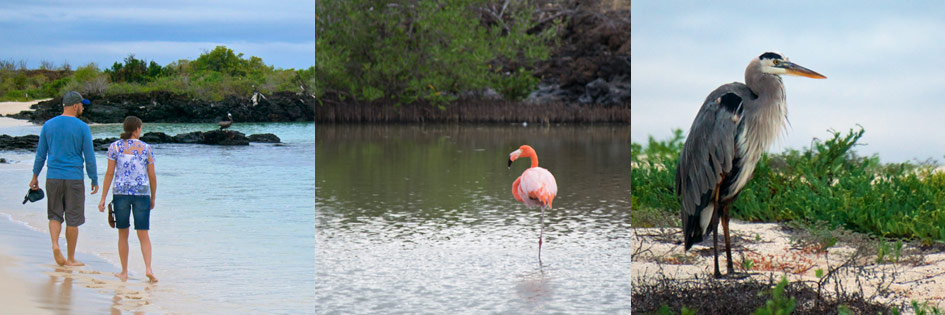
Bachas Beach is located on the north shore of Santa Cruz and is a beach for swimming. One of the few remnants of the U.S. World War II presence in the Galapagos, a floating pier, can be seen here. You may see flamingos, Sally Lightfoot crabs, hermit crabs, black-necked stilts, and whimbrels. Sea turtles also nest on the beach.
 |
|
|---|---|
Bachas Beach, Santa Cruz Island |
|
Highlights & Animals: |
World War II remnants. Sally Lightfoot crabs, hermit crabs, black necked stilts, whimbrels, sea turtles. |
Difficulty: |
Easy |
Type of Landing: |
Wet Landing |
Possible Activities: | Hiking, snorkeling |
Day 6: Sunday
Floreana Island
In the morning:
Post Office Bay
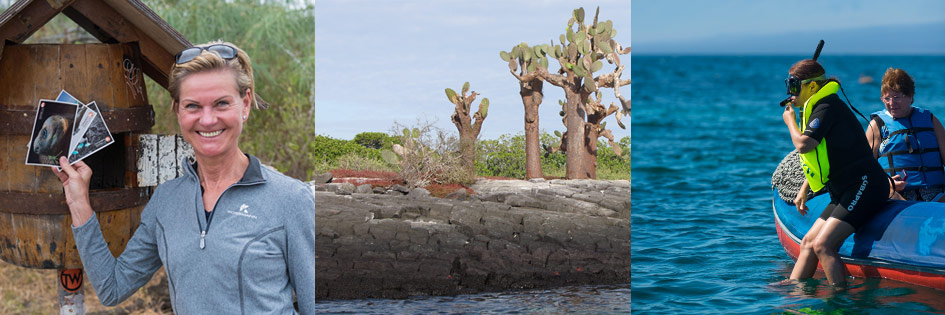
You will land on a beach and head to a spot where 18th century whalers placed a wooden barrel used as an unofficial mail box. The custom continues to this day with Galapagos visitors. So, don’t forget your postcards, and don’t be surprised if the post card arrives to its destination before you even get home!
 |
|
|---|---|
Post Office Bay, Floreana Island |
|
Highlights & Animals: |
Post office barrel, nice sandy beach |
Difficulty: |
Easy |
Type of Landing: |
Wet Landing |
Possible Activities: | Hiking, snorkeling |
In the afternoon:
Cormorant Point
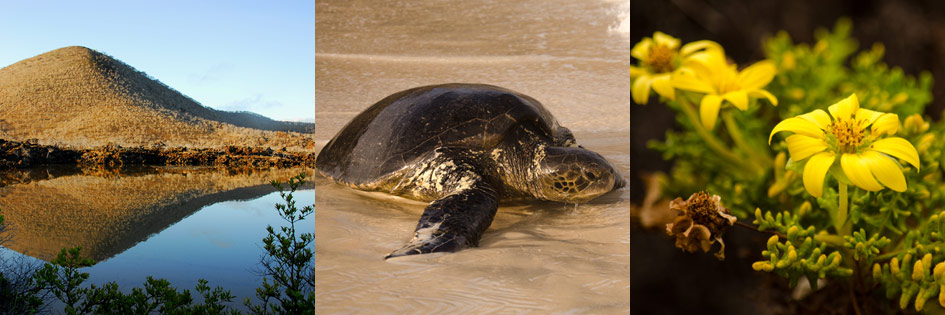
Cormorant Point hosts a large flamingo lagoon where other birds such as common stilts and white-cheeked pintails can also be seen. The beaches on this island are distinct: The Green Beach is named so due to its green color, which comes from a high percentage of olivine crystals in the sand, and the Flour Sand Beach is composed of white coral.
 |
|
|---|---|
Cormorant Point, Floreana Island |
|
Highlights & Animals: |
Flamingoes, green-colored beach |
Difficulty: |
Easy |
Type of Landing: |
Wet Landing |
Possible Activities: | Hiking, snorkeling, dinghy ride, kayaking |
Or:
Devil’s Crown
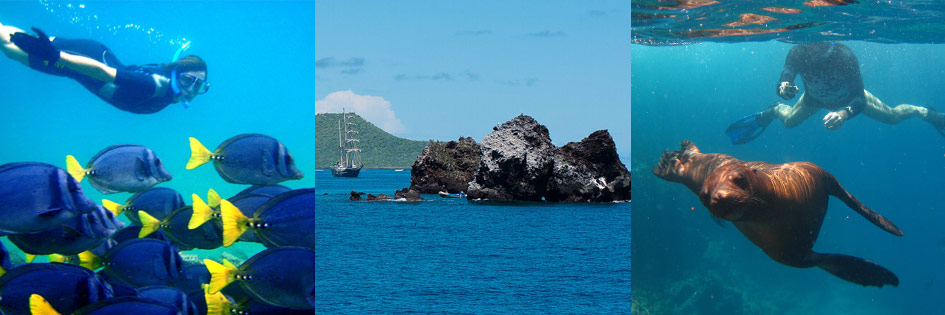
You will have a chance to snorkel around Devil’s Crown which is the rocky remains of an offshore volcano sticking out of the water. This is a great location to spot a wide range of marine creatures.
 |
|
|---|---|
Devil’s Crown, Floreana Island |
|
Highlights & Animals: |
Large array or marine species |
Difficulty: |
Moderate/Difficult |
Type of Landing: |
No Landing |
Possible Activities: | Snorkeling |
Day 7: Monday
Española Island
In the morning:
Suarez Point
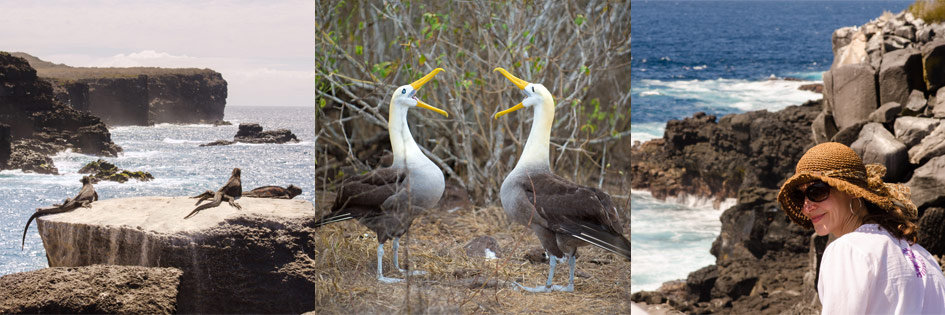
On the trail to Suarez Point you will have the chance to spot blue-footed boobies, albatrosses, and Nazca boobies. This island is the breeding site of nearly all of the world’s 12,000 pairs of waved albatrosses. You will also visit a beautiful site on the ocean front where there is a cliff that the large albatrosses use as a launching pad! You will have the chance to see the famous blowhole that spurts sea water into the air. The landscape is great for photography.
 |
|
|---|---|
Suarez Point, Española Island |
|
Highlights & Animals: |
Hood mockingbirds, Nazca boobies, waved albatrosses (approximately from the last week of April until the last week of January), red-billed tropicbirds, lava lizards, Galapagos hawks, blowhole, amazing landscape and maybe blue-footed boobies. |
Difficulty: |
Difficult |
Type of Landing: |
Dry Landing |
Possible Activities: | Hiking |
In the afternoon:
Gardner Bay, Gardner Islet & Osborn Islet
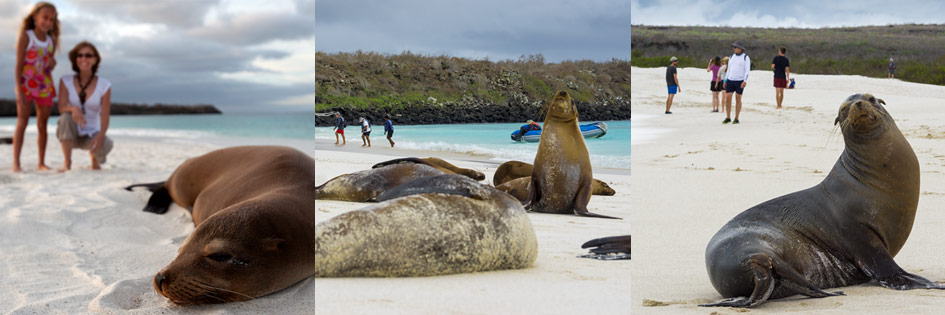
This excursion takes you to the spectacular Gardner Bay. After landing, you can walk across a lovely white-sand beach amongst a busy sea lion colony or dive into the water to swim with sea lion pups. You may also see curious mockingbirds on the beach.
 |
|
|---|---|
Gardner Bay, Gardner Islet & Osborn Islet, Española Island |
|
Highlights & Animals: |
White sandy beach, sea lions, mockingbirds; snorkeling: colorful fish, sea lion nursery |
Difficulty: |
Easy |
Type of Landing: |
Wet Landing |
Possible Activities: | Hiking, snorkeling, dinghy ride, kayaking |
Day 8: Tuesday
San Cristobal Island
In the morning:
Gianni Arismendy Interpretation Center
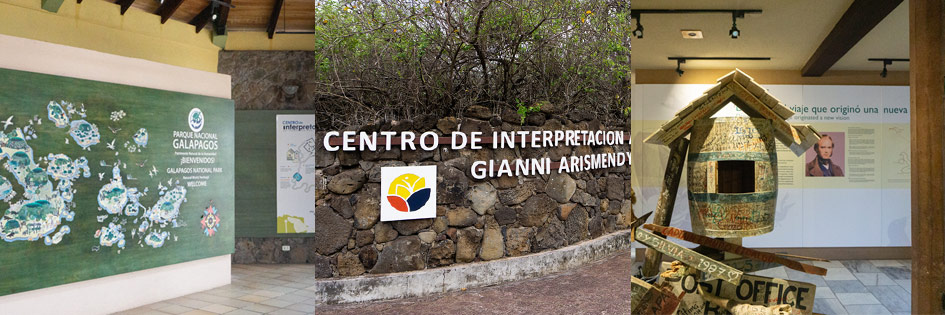
This site is part of an environment project. The tour of this center will explore the natural history of the islands including human interaction and conservation efforts. The Museum of Natural History explains the volcanic origin of the archipelago, ocean currents, climate, and the arrival of endemic species. The Human History exhibit chronologically describes significant events such as discovery and colonization of the islands.
 |
|
|---|---|
Gianni Arismendy Interpretation Center, San Cristobal Island |
|
Highlights & Animals: |
Great exhibits about the archipelago’s natural history |
Difficulty: |
Easy |
Type of Landing: |
Dry Landing |
Possible Activities: | Hiking |
Afterwards:
San Cristobal airport departure
After this final visit, you will be transferred to the San Cristobal airport in time for your flight back to the mainland.
San Cristobal airport departure, San Cristobal Island |
|
|---|---|
Difficulty: |
Easy |
Type of Landing: |
Dry Landing |
Itineraries are generally stable but may change due to weather, wildlife, safety, park regulations, guest abilities, or operational needs. Images shown are referential, and not all listed activities on each visitor point may be completed. Your guide and captain will always aim to choose the best possible itinerary.
www.infinity-galapagos.com