


Horizon
5-day Cruise "A"
(Bartholomew, Santiago, Rabida, Genovesa, Mosquera, Santa Cruz, North Seymour)
Day 1: Tuesday
Bartholomew Island
In the morning:
Baltra Airport Arrival
Morning flight from Quito or Guayaquil to Baltra, Galapagos Islands.
You will arrive at Baltra Island in the morning. After passing through immigration and baggage claim, you will be met by a Horizon staff member and transferred to the yacht. You will be shown to your cabin where you will have some time to settle in before lunch and a welcome briefing.
Baltra Airport Arrival |
||||
|---|---|---|---|---|
Difficulty: |
N/A |
|||
Type of Landing: |
N/A |
|||
 |
|
|---|---|
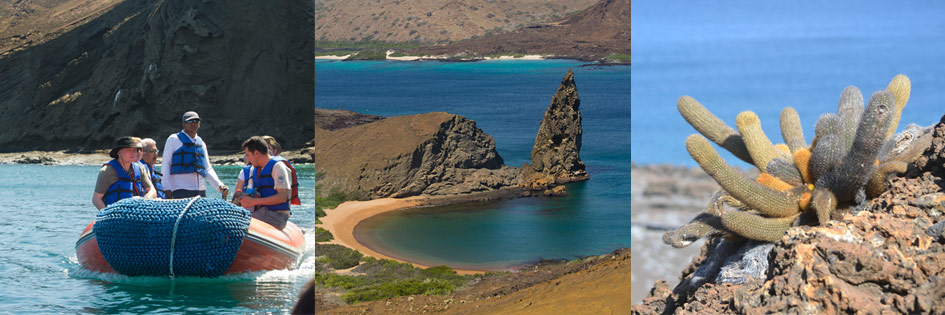
Pinnacle Rock, Bartholomew Island |
|
Highlights & Animals: |
Pinnacle Rock, panoramic view, moonlike landscape, penguins, pioneer plants, lava cactus; snorkeling: penguins, reef sharks, rays, and great colorful fish. |
Difficulty: |
Moderate/Difficult |
Type of Landing: |
Dry & Wet Landings |
Possible Activities: | Hiking, snorkeling, dinghy ride |
Day 2: Wednesday
Santiago and Rabida Islands
In the morning:
Egas Port
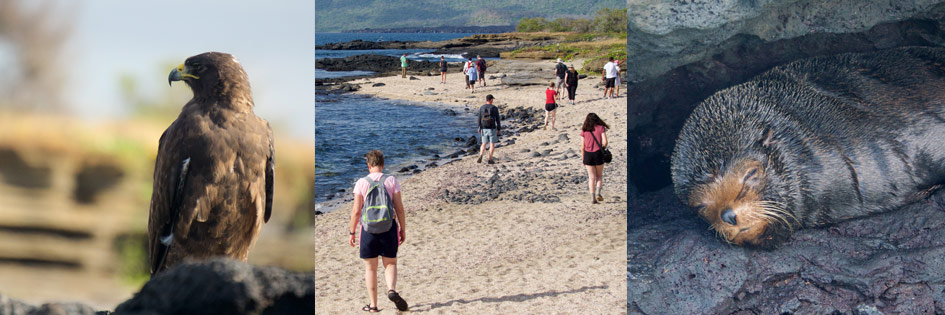
Egas Port, also known as James Bay, on Santiago Island is home to the curious Galapagos hawks and quick-footed Galapagos lava lizards. The trail leads to the coastline with gorgeous tide pools and grottos full of fauna. Here the Galapagos furseals bathe in the sun. This is also a great snorkeling site.
 |
|
|---|---|
Egas Port, Santiago Island |
|
Highlights & Animals: |
Furseals, Galapagos sea lions, tidal pools and grottos, Galapagos hawks, oyster catchers, marine iguanas, finches; snorkeling: reef sharks, turtles, rays, nice underwater formations. |
Difficulty: |
Easy/Moderate |
Type of Landing: |
Wet Landing |
Possible Activities: | Hiking, snorkeling, dinghy ride, kayaking |
In the afternoon:
Rabida
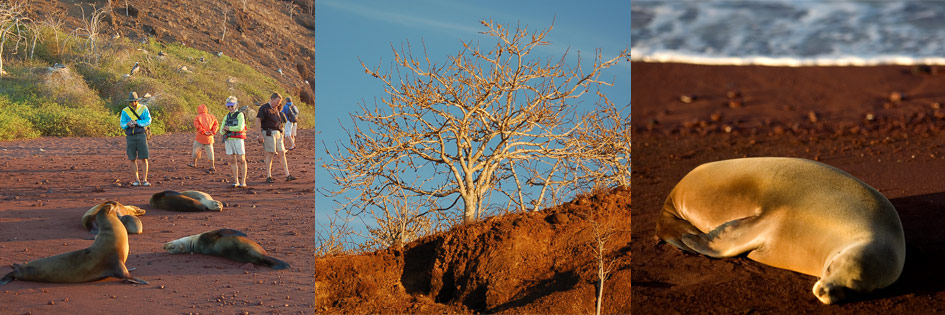
You will visit Rabida Island (or Jervis) which is one of the most colorful and volcanically varied islands in the archipelago as well as a great snorkeling site. We will start on Rabida’s famous maroon/red sand beach, and after an easy hike, you will arrive to a stunning lookout to enjoy the amazing landscapes. The island is a birdwatcher’s delight. Some species are abundant such as a few varieties of finches, Galapagos vermilion flycatchers, Galapagos hawks and brown pelicans.
 |
|
|---|---|
Rabida Island |
|
Highlights & Animals: |
Snorkeling: white-cheeked pintail ducks, colourful fish, sea lions, brackish water lagoon, pelicans |
Difficulty: |
Easy/Moderate |
Type of Landing: |
Wet Landing |
Possible Activities: | Hiking, snorkeling |
Day 3: Thursday
Genovesa Island
In the morning:
Darwin Bay
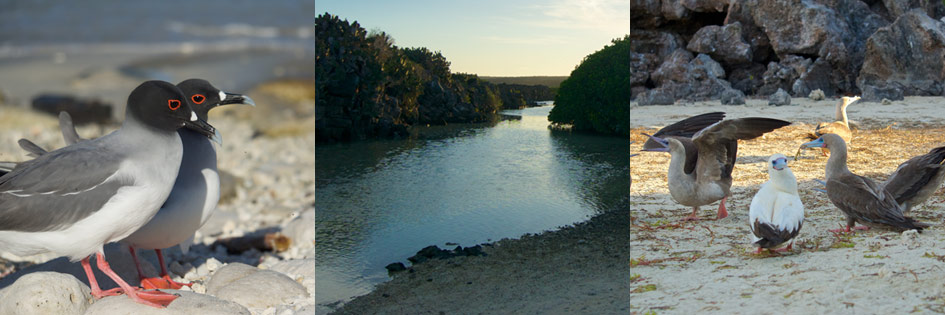
Visit the white-sand coral beach of Darwin Bay which includes a half mile trail (0,75km) that winds through mangroves filled with land birds. Nazca boobies, red-footed boobies, and swallow-tailed gulls, which can easily be spotted here. Further down the path we’ll find tidal pools where sea lions swim playfully. At the end is a spectacular view of a cliff.
 |
|
|---|---|
Darwin Bay, Genovesa Island |
|
Highlights & Animals: |
Nazca boobies, red-footed boobies, swallow-tail gulls, mangroves, coral pebble beach, snorkeling: rays, colorful reef fish, and hammerhead sharks occasionally |
Difficulty: |
Easy |
Type of Landing: |
Wet Landing |
Possible Activities: | Hiking, snorkeling, dinghy ride, kayaking |
In the afternoon:
El Barranco
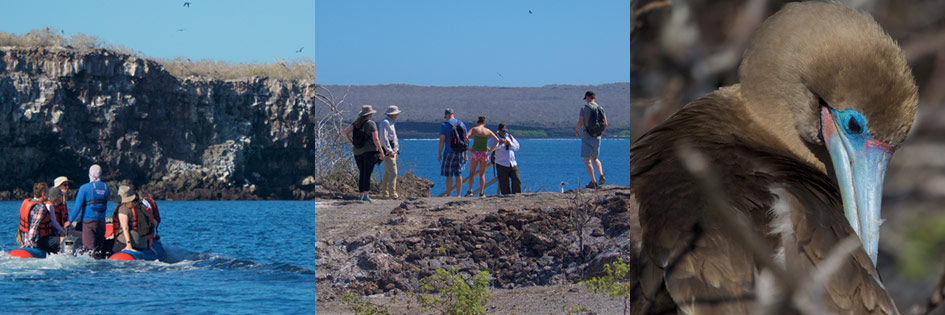
El Barranco, also known as Prince Phillip’s Steps, is a steep, rocky path that leads up a high cliff rock face. A marvelous view can be appreciated from here. This site is also home to Palo Santo vegetation as well as red-footed boobies, short-eared owls, Galapagos storm petrels, and Galapagos doves.
 |
|
|---|---|
El Barranco, Genovesa Island |
|
Highlights & Animals: |
Red-footed boobies, short-eared owls, storm-petrels, Galapagos doves |
Difficulty: |
Moderate |
Type of Landing: |
Dry Landing |
Possible Activities: | Hiking, snorkeling, dinghy ride, kayaking |
Day 4: Friday
Mosquera and Santa Cruz Islands
In the morning:
Mosquera Islet
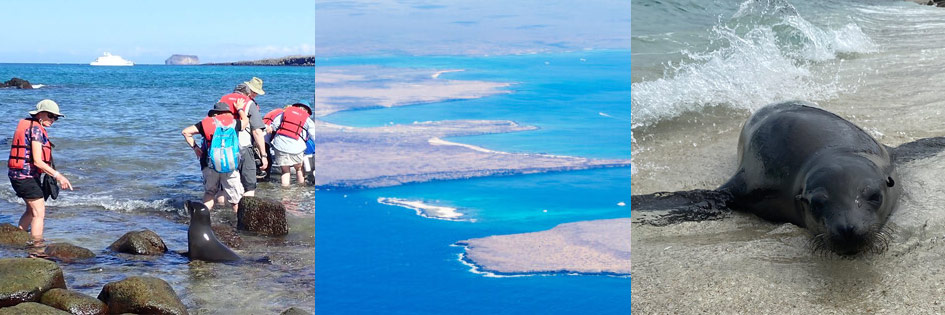
Mosquera Islet is located between the islands of Baltra and North Seymour. This reef of rocks and coral (the result of an uprising) is only 160 meters across at its narrowest width. This island has one of the largest populations of sea lions and is home to many shorebirds. There have been occasional reports at this site of orcas feeding on sea lions.
 |
|
|---|---|
Mosquera Islet, Mosquera Island |
|
Highlights & Animals: |
Orcas, sea lions, shore birds |
Difficulty: |
Easy |
Type of Landing: |
Wet Landing |
Possible Activities: | Hiking, snorkeling |
In the afternoon:
Highlands
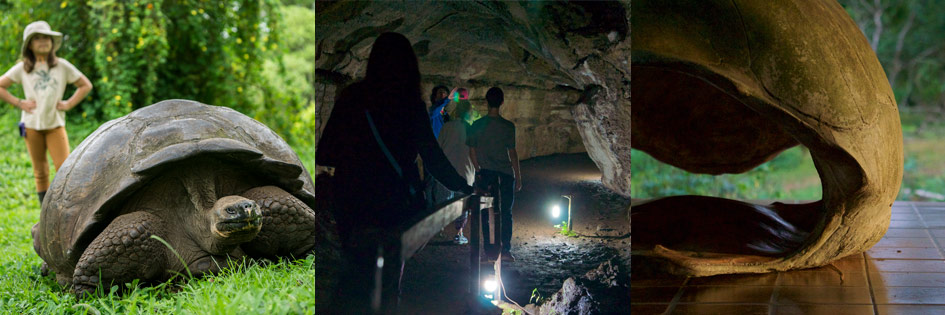
Accessible by bus from Puerto Ayora, the highlands of Santa Cruz are a deep green which contrast beautifully with the dry, lower part of the islands. The predominant vegetation in the highlands are Scalesia trees which create a lush green forest. The lava tunnels, over half a mile long, are underground and walking through them is a unique, surreal experience. At this place you’ll have lunch.
 |
|
|---|---|
Highlands, Santa Cruz Island |
|
Highlights & Animals: |
Lava tunnels, Finches, wild tortoises, tortoise nesting site. |
Difficulty: |
Easy |
Type of Landing: |
Dry Landing |
Possible Activities: | Hiking |
Afterwards:
Fausto Llerena Breeding Center
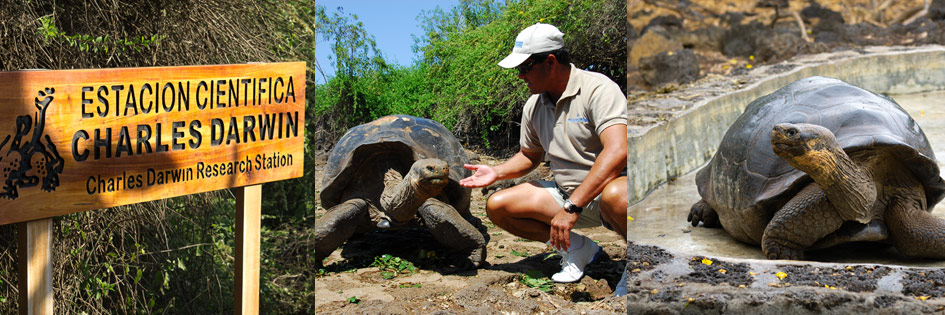
You will visit “Fausto Llerena” Tortoise Breeding Center in Puerto Ayora, where giant tortoises are bred in captivity. This is home to tortoises ranging from 3-inches (new hatchlings) to 4-feet long adults. Subspecies of the giant tortoises interact with one another, and many of the older tortoises are accustomed to humans stretching out their heads for a photo opportunity. The babies are kept until they are about four years-old and strong enough to survive on their own.
 |
|
|---|---|
Fausto Llerena Breeding Center, Santa Cruz Island |
|
Highlights & Animals: |
Giant tortoises, finches, Galapagos rails |
Difficulty: |
Easy |
Type of Landing: |
Dry Landing |
Possible Activities: | Hiking |
Day 5: Saturday
North Seymour Island
In the morning:
North Seymour
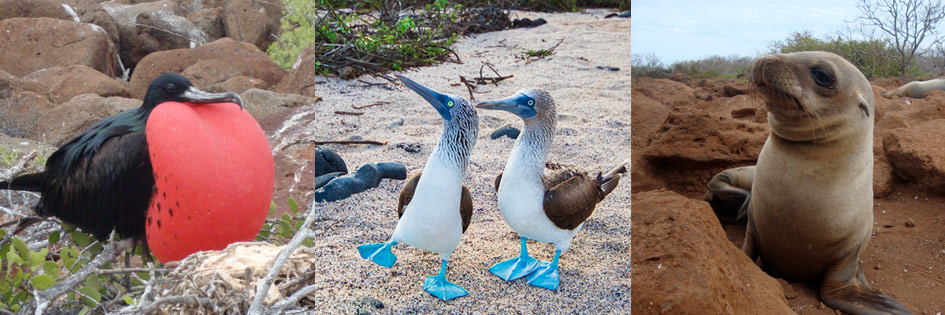
In North Seymour you may see Galapagos sea lions, blue-footed boobies, and magnificent frigate birds which are abundant on this island. North Seymour was formed by a series of submarine lava flows containing layers of sediment that were uplifted by tectonic activity. The island is characterized by its arid vegetation zone.
 |
|
|---|---|
North Seymour Island |
|
Highlights & Animals: |
Land & marine iguanas, frigate birds, blue-footed boobies, sea lions; snorkeling: rays, reef sharks, fish, garden eels. |
Difficulty: |
Moderate/Difficult |
Type of Landing: |
Dry Landing |
Possible Activities: | Hiking, snorkeling, dinghy ride |
Afterwards:
Baltra Airport Departure
After this final visit, you will be transferred to the Baltra airport in time for your flight back to the mainland.
Baltra Airport Departure |
|
|---|---|
Difficulty: |
N/A |
Type of Landing: |
N/A |
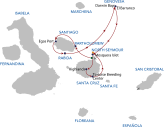
Itineraries are generally stable but may change due to weather, wildlife, safety, park regulations, guest abilities, or operational needs. Images shown are referential, and not all listed activities on each visitor point may be completed. Your guide and captain will always aim to choose the best possible itinerary.
| Sales | Reservations | Address | ||
|---|---|---|---|---|
Toll Free: +1-877-209-7243 | 12 de Octubre Ave. N26-48 and La Coruña Ave. Mirage Tower, office 6D. Quito - Ecuador | |||
Direct Line: +593-2-602-4568 | ||||
www.royalgalapagos.com • www.galapagoshorizon-cruise.com (Unbranded site)
VTA: 2026/11/06