Cormorant II
5-day Cruise "A"
(Santa Cruz, Genovesa, South Plaza, Santa Fe, San Cristobal)
Day 1: Saturday
Santa Cruz Island
In the morning:
Baltra Airport Arrival
Morning flight from Quito or Guayaquil to Baltra, Galapagos Islands.
You will arrive at Baltra Island in the morning. After passing through immigration and baggage claim, you will be met by a Cormorant II staff member and transferred to the yacht. You will be shown to your cabin where you will have some time to settle in before lunch and a welcome briefing.
Baltra Airport Arrival |
|
|---|---|
Difficulty: |
N/A |
Type of Landing: |
N/A |
 |
|
|---|---|
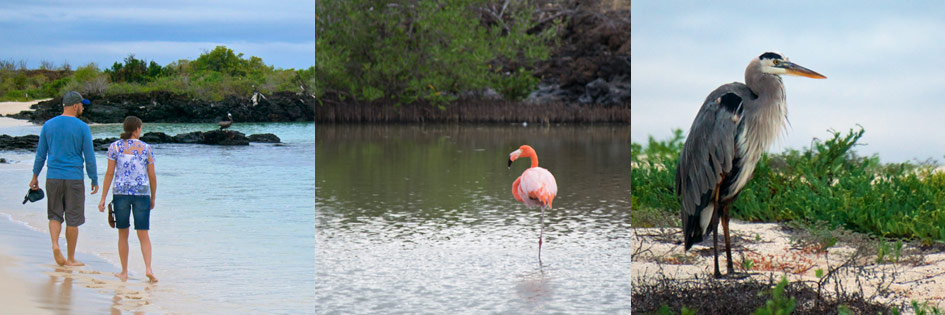
Bachas Beach, Santa Cruz Island |
|
Highlights & Animals: |
World War II remnants. Sally Lightfoot crabs, hermit crabs, black necked stilts, whimbrels, sea turtles. |
Difficulty: |
Easy |
Type of Landing: |
Wet Landing |
Possible Activities: | Hiking, snorkeling |
Day 2: Sunday
Genovesa Island
In the morning:
El Barranco
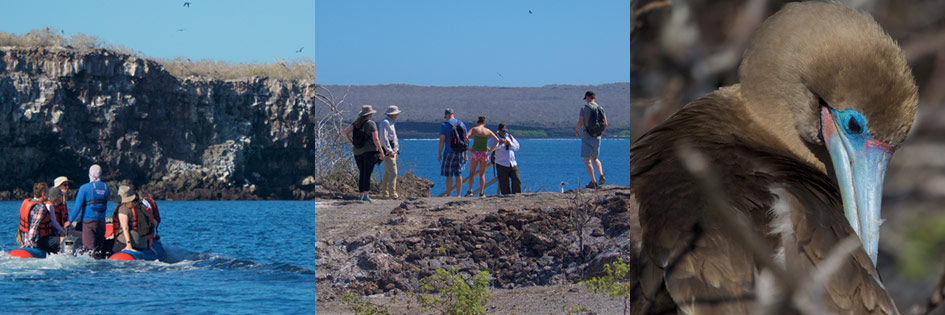
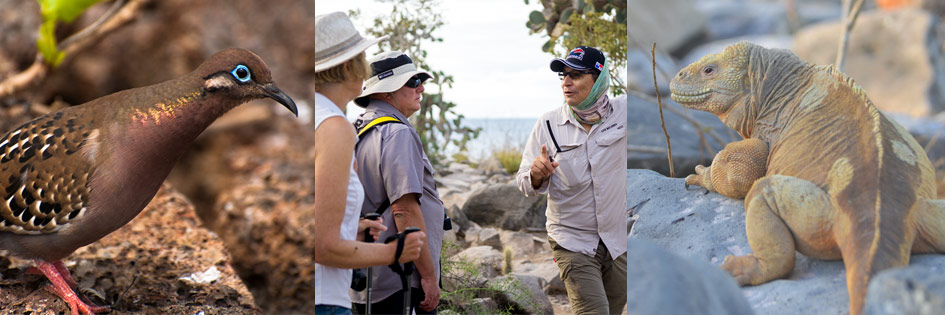
El Barranco, also known as Prince Phillip’s Steps, is a steep, rocky path that leads up a high cliff rock face. A marvelous view can be appreciated from here. This site is also home to Palo Santo vegetation as well as red-footed boobies, short-eared owls, Galapagos storm petrels, and Galapagos doves.
 |
|
|---|---|
El Barranco, Genovesa Island |
|
Highlights & Animals: |
Red-footed boobies, short-eared owls, storm-petrels, Galapagos doves |
Difficulty: |
Moderate |
Type of Landing: |
Dry Landing |
Possible Activities: | Hiking, snorkeling, dinghy ride, kayaking, paddle board |
In the afternoon:
Darwin Bay
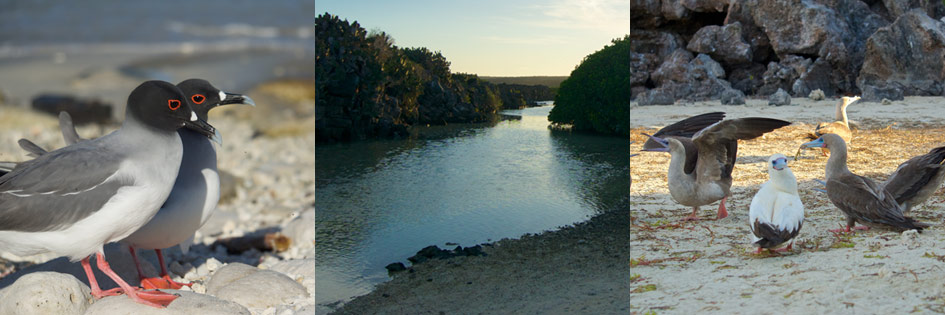
Visit the white-sand coral beach of Darwin Bay which includes a half mile trail (0,75km) that winds through mangroves filled with land birds. Nazca boobies, red-footed boobies, and swallow-tailed gulls, which can easily be spotted here. Further down the path we’ll find tidal pools where sea lions swim playfully. At the end is a spectacular view of a cliff.
 |
|
|---|---|
Darwin Bay, Genovesa Island |
|
Highlights & Animals: |
Nazca boobies, red-footed boobies, swallow-tail gulls, mangroves, coral pebble beach, snorkeling: rays, colorful reef fish, and hammerhead sharks occasionally |
Difficulty: |
Easy |
Type of Landing: |
Wet Landing |
Possible Activities: | Hiking, snorkeling, dinghy ride, kayaking, paddle board |
Day 3: Monday
South Plaza and Santa Fe Islands
In the morning:
South Plaza Island
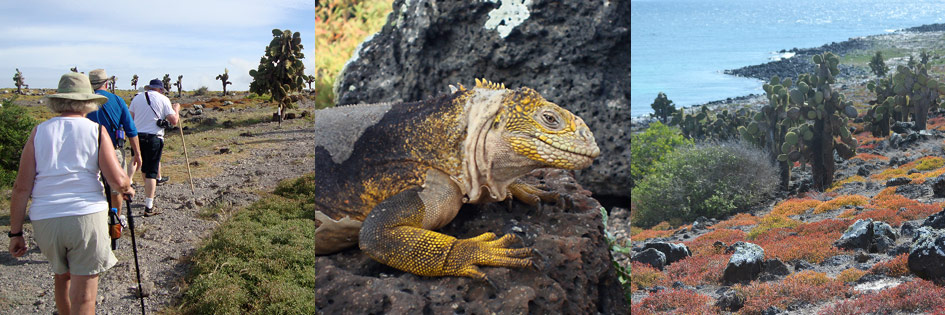
This small island with steep cliffs was formed by rising lava and is now covered by Opuntia cacti. It is also home to one of the largest sea lion colonies as well as colorful yellow and red land iguanas. The most characteristic plant is the Sesuvium. During the rainy season its color is a greenish to yellowish tone and in the dry season (end of June through January) a bright red.
 |
|
|---|---|
South Plaza Island |
|
Highlights & Animals: |
Land iguanas, sea lion colony, Audubon’s shearwaters, swallow-tailed gulls, Nazca boobies, amazing landscape with cliffs |
Difficulty: |
Moderate |
Type of Landing: |
Dry Landing |
Possible Activities: | Hiking, dinghy ride, kayaking, paddle board |
In the afternoon:
Santa Fé Island
Santa Fe Island (Barrington) is home to the small picturesque bay and anchorage on the island’s northeast coast. The bay has two visitor trails: one leading to a scenic viewpoint atop a cliff, and the other spanning from a small beach to a tall prickly pear cactus forest.
 |
|
|---|---|
Santa Fé Island, Santa Fe Island |
|
Highlights & Animals: |
Land iguanas, giant Opuntia cacti |
Difficulty: |
Moderate |
Type of Landing: |
Dry Landing |
Possible Activities: | Hiking, snorkeling, dinghy ride, kayaking, paddle board |
Day 4: Tuesday
San Cristobal Island
In the morning:
Pitt Point
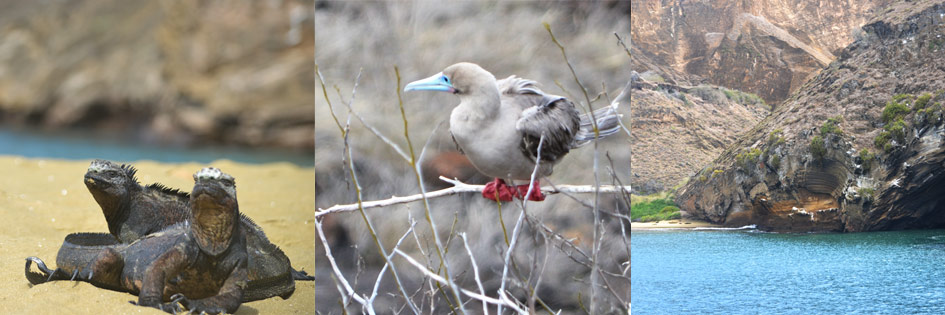
Pitt Point, situated on the north-eastern tip of the San Cristobal island, hosts frigate birds, storm petrels, and all three types of booby birds: the Nazca, blue-footed and red-footed boobies. A steep trail goes up a cliff and through a ravine leading visitors to an area with an abundance of birds.
 |
|
|---|---|
Pitt Point, San Cristobal Island |
|
Highlights & Animals: |
Frigate birds, storm petrels, Nazca boobies, blue- and red-footed boobies |
Difficulty: |
Moderate/Difficult |
Type of Landing: |
Wet Landing |
Possible Activities: | Hiking, snorkeling, dinghy ride, kayaking, paddle board |
In the afternoon:
Witch Hill
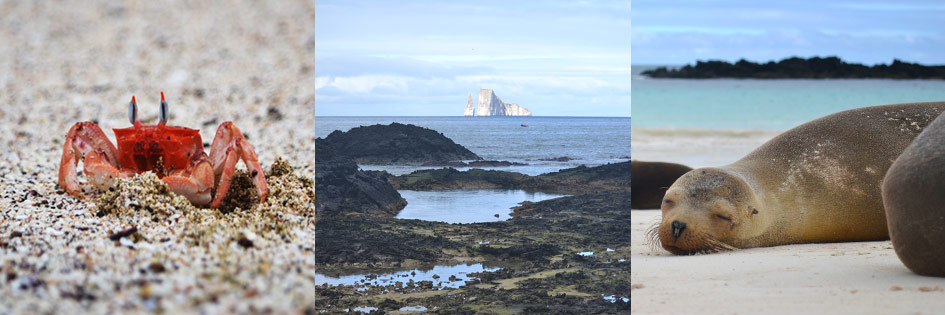
Located on the northern coast, this eroded hill and its surroundings present one of the most picturesque beaches in the Galapagos with its white powdery sand and the abundance of animals. Wildlife includes sea turtles, rays, and various types of booby birds. The clear water provides an excellent opportunity for enjoying swimming and snorkeling.
 |
|
|---|---|
Witch Hill, San Cristobal Island |
|
Highlights & Animals: |
Beautiful rock formations, sea lions, shore birds, finches and mockingbirds; Snorkeling: nice tropical fish, anemones, sponges, coral |
Difficulty: |
Easy |
Type of Landing: |
Wet Landing |
Possible Activities: | Hiking, snorkeling, dinghy ride, kayaking, paddle board |
Day 5: Wednesday
San Cristobal Island
In the morning:
David Rodriguez Breeding Center “La Galapaguera”
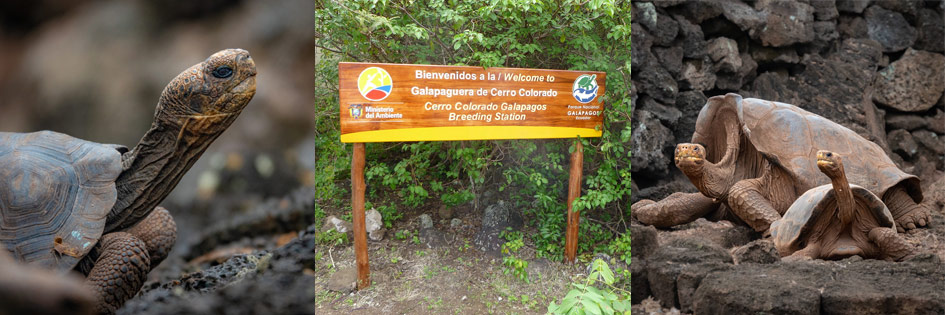
Breeding Center David Rodriguez - “La Galapaguera”, in Cerro Colorado, is a new visitor site in the southeast part of San Cristobal Island and can now be reached in roughly one hour by road from Puerto Baquerizo Moreno. On the trees and shrubs surrounding the site, you may see land birds like warblers, finches and mockingbirds. Giant tortoises can be observed on the trails. They live there wild but in a protected area to ensure their survival by sealing them off from introduced predators like pigs and goats.
 |
|
|---|---|
David Rodriguez Breeding Center “La Galapaguera”, San Cristobal Island |
|
Highlights & Animals: |
Giant tortoises, finches, warblers, mockingbirds |
Difficulty: |
Easy/Moderate |
Type of Landing: |
Dry Landing |
Possible Activities: | Hiking |
Afterwards:
San Cristobal airport departure
After this final visit, you will be transferred to the San Cristobal airport in time for your flight back to the mainland.
San Cristobal airport departure, San Cristobal Island |
|
|---|---|
Difficulty: |
Easy |
Type of Landing: |
Dry Landing |
Itineraries are generally stable but may change due to weather, wildlife, safety, park regulations, guest abilities, or operational needs. Images shown are referential, and not all listed activities on each visitor point may be completed. Your guide and captain will always aim to choose the best possible itinerary.
www.cormorant-ii-cruise.com